
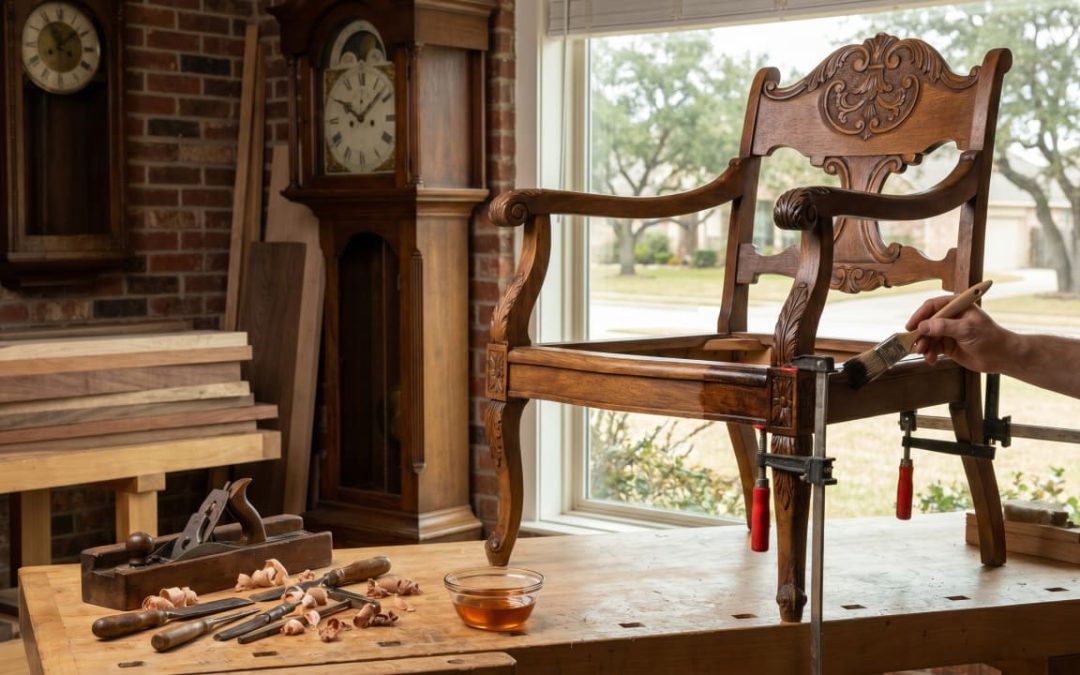
Wood Furniture Repair in Frisco, TX, When the Piece Is Worth Saving
Frisco has grown faster than almost any city in Texas over the past two decades. With that growth comes a particular furniture challenge: thousands of homeowners who moved here from older parts of the state, or inherited pieces from parents and grandparents across North Texas, are now sitting on oak dining sets, walnut writing desks, cherry dressers, and mahogany buffets that are structurally tired or cosmetically worn. The question they keep asking is the right one: is this piece worth fixing, or do I buy something new?
In most cases with solid-wood construction, the answer is repair. At Andrew’s Refinishing, we’ve been doing wood furniture repair across the Dallas-Fort Worth area since 1980, from our Carrollton workshop, just 20-25 minutes down the Dallas North Tollway from Frisco. We pick up and deliver throughout the metro, so getting your piece to us is the easy part.
This guide walks you through the most common wood furniture repair scenarios, loose joints, failing finishes, structural damage, and heirloom pieces that need careful hands. We’ll explain what the repair actually involves so you can make an informed decision before you call or send photos for a free online estimate.
According to HomeAdvisor’s 2025 furniture repair cost data professional furniture repair typically costs a fraction of replacement, and for solid-wood pieces worth $800 or more at today’s retail prices, repair almost always wins on economics alone, before you even factor in sentimental value.
Why Frisco Homeowners Are Choosing Repair Over Replacement
Frisco’s rapid expansion brought a lot of new construction, new furniture showrooms, and plenty of options to buy something brand-new. But it also brought an influx of families who relocated from older parts of Texas and beyond, and with them came the furniture. Grandma’s pecan dining table. Dad’s walnut rolltop desk. An antique mahogany sideboard that came over with the family in the 1970s.
These pieces represent something a new showroom can’t replicate: real wood, real history, and real construction. A dining table built in the 1960s from solid oak has mortise-and-tenon joinery and quarter-sawn lumber that most new furniture at any price point simply doesn’t match. When a leg wobbles or a finish clouds over, the instinct to discard it is understandable, but almost always unnecessary.
The 2025 eco-friendly furniture trend report from Honored Heirlooms Woodworking notes that homeowners are increasingly prioritizing restoration of sentimental and high-value wooden pieces over purchasing low-quality “fast furniture”, a trend that aligns exactly with what we see in the workshop every week.
Here’s a practical example: replacing a solid walnut dining table and six chairs today costs $3,000 to $8,000 or more at most quality retailers. Repairing loose joints, refinishing the top, and touching up chair legs on the set you already own? Typically a fraction of that. The math isn’t close, and that’s before you account for the fact that the piece you’re keeping was probably better-built to begin with.
Loose Joints: The Most Common Wood Furniture Repair in Frisco
Walk through any furniture repair shop and you’ll hear the same complaint: “The chair wobbles.” Or “the table leg rocks.” Or “the stretcher keeps popping loose.” Loose joints are the single most common wood furniture repair we do, and they’re almost always fixable, even when the original glue has completely failed.
Wood furniture joints fail for predictable reasons. North Texas heat and the humidity swings between our dry winters and humid summers cause wood to expand and contract constantly. Over years and decades, that movement fatigues the original glue bond, especially hide glue, which most pre-1970s furniture used. The joint itself isn’t broken; the adhesive system is just exhausted.
The proper repair sequence looks like this:
- Disassembly: The joint is carefully taken apart. Forcing a wobbly joint back together without disassembly is one of the most common DIY mistakes, the old glue residue prevents a proper new bond.
- Cleaning: All old glue is removed from both mating surfaces. On hide-glue joints, this often means heat and moisture. On more modern PVA joints, it may require mechanical cleaning.
- Evaluation: We check whether the mortise-and-tenon or dowel is structurally intact. If a dowel has sheared or a tenon has cracked, it needs replacement before re-gluing, otherwise you’re just delaying the next failure.
- Repair or replacement: Damaged dowels are drilled out and replaced with fresh hardwood dowels sized to the joint. Cracked tenons get a splice repair or full replacement depending on severity.
- Re-gluing: Fresh professional-grade wood glue is applied to both surfaces. The joint is reassembled, clamped properly, and allowed to cure fully, typically 24-48 hours minimum before any load is applied.
- Finish blending: If the disassembly disturbed the finish around the joint, we blend the touch-up so the repair is invisible.

According to Popular Woodworking’s expert guide on re-gluing furniture proper surface preparation before re-gluing is the single most critical factor in joint longevity, more important than glue type or clamping technique. That’s why our repair process always starts with full disassembly rather than injecting glue into a half-open joint, which is a temporary patch at best.
For a dining chair, this kind of joint repair typically runs $100 to $250 per chair depending on how many joints need work and whether any dowels or tenons require replacement. For a table with a rocking leg, costs depend on whether it’s a leg-to-apron joint issue or a stretcher problem. We can give you a precise estimate from photos before your piece ever leaves home.
Surface and Finish Repair: Scratches, Cloudiness, and Water Marks
The second most common call we get is about finish damage: a white haze on a dining table after a hot dish was set down without a pad, deep scratches from a move, black water rings from a wet glass, or a finish that’s cracked and crazed from age and UV exposure. These are all repairable, and in many cases they don’t require a full strip-and-refinish.
The approach depends on what the damage actually is and how deep it goes:
- White haziness (bloom): Usually a moisture reaction in the finish itself, not the wood. On lacquer and shellac, this often responds to heat treatment or solvent reflow without any sanding or stripping.
- Light scratches: If the scratch is in the finish layer only, hasn’t broken through to bare wood, it can be filled and leveled with finish, then buffed. No stripping required.
- Deep gouges reaching the wood: These need wood filler or a splice, then color-matching and finish blending. On figured wood like walnut or cherry, this requires a skilled eye for grain pattern and color.
- Black water rings: Black rings (as opposed to white) mean the moisture got past the finish and into the wood, creating tannin-iron oxidation. These usually need light sanding into the wood surface, oxalic acid treatment, and refinishing of the affected area or the full top.
- Cracked or alligatored finish: When the finish has crazed across a large surface, spot repair doesn’t hold well. A full strip-and-refinish is the correct call, and on a good solid-wood piece, it’s worth it.
The most common finish types we see on heirlooms are lacquer (dominant on American furniture from the 1940s-1980s), shellac (on antiques and pre-1940s pieces), and polyurethane (on furniture from the 1980s onward). Each responds differently to repair work, which is why knowing your finish type matters before you attempt any DIY touch-up at home, the wrong solvent on the wrong finish makes the problem significantly worse.
Our team will assess the finish type as part of the estimate process. You can read more about our full refinishing services in Dallas-Fort Worth if your piece needs more than targeted repair, sometimes a piece has cosmetic damage extensive enough that a full refinishing is the better investment over spot repairs.
Structural Repair: Broken Legs, Collapsed Frames, and Drawer Rebuilds
Beyond loose joints and surface damage, we handle more significant structural work. Broken chair legs, collapsed bed frames, shattered drawer slides, cracked aprons, these are the repairs people assume aren’t fixable but almost always are.
Broken chair or table legs: A leg that’s broken cleanly can often be repaired with a dowel splice, a steel or hardwood dowel is inserted through both halves to create a pin, then glued and clamped. The repair is structurally sound and, when finished properly, invisible. For a leg that’s splintered beyond splicing, we turn a replacement on the lathe to match the original profile. This kind of custom millwork is part of what separates a furniture repair specialist from a general handyman.
Drawer rebuilds: Older drawer construction used solid wood sides and dovetail joinery. When these fail, usually from wood movement cracking a side, or a dovetail separating, the repair is straightforward: clean up the joint, re-glue, clamp. When drawer slides (the wooden runners) have worn down to the point where the drawer won’t stay level, we replace the runners in kind.
Cane and rush replacement: If your chair has a woven cane or rush seat or back panel that’s sagging or torn, this is a direct repair service we offer. We source machine-cane, hand-woven cane, and rush in appropriate weaves for the piece. It’s one of those repairs that’s highly visible, a fresh cane or rush panel transforms the look of a chair, and it’s surprisingly economical compared to the cost of a replacement chair of comparable quality.
Veneer repair: Veneer lift, bubbling, or missing sections are common on furniture from the 1950s-1980s. We flatten lifted veneer with heat and fresh adhesive, and patch missing sections with matching veneer selected for grain and color. On figured species like crotch walnut or bird’s-eye maple, matching the patch takes patience, but it’s what we do every day.
Heirloom Pieces from Frisco Families: What We See Most
Frisco’s heritage is newer than many North Texas cities, but its residents carry their family histories with them. We regularly pick up pieces that have traveled a long road: pecan dining tables from East Texas farmhouses, solid mahogany bedroom sets from Louisiana, walnut secretary desks from Oklahoma estates, and cherry end tables that came down through three generations before landing in a North Texas living room.
These pieces share a few common characteristics. They’re built from species you rarely see in new retail furniture, pecan, cherry, solid quarter-sawn oak, genuine mahogany (not Philippine lauan). They use joinery that was designed to be repaired, not discarded. And they carry the kind of patina and figure that you genuinely cannot reproduce with a new piece at any price.
The most common heirloom repair scenario we handle: a piece arrives after an estate settlement, having been in storage or a less-than-ideal environment. The finish is dull, possibly checking or alligatoring. A couple of joints are loose. There may be a ring or scratch on the top. The bones are perfect, the wood is solid, the construction is intact, and the piece is obviously quality.
In this situation, a combination repair-and-refinish is usually the right call. We address the structural issues first (loose joints, hardware), then strip and refinish the piece in a finish that matches the original intent, or update it if the owner wants a fresh look while keeping the patina on the base and sides. The result is a piece that looks the way it did when it was new, reinforced for another generation of use.
For antique pieces with significant provenance, furniture that’s genuinely collectible or has family documentation, we take a conservative approach to patina preservation. Not every surface imperfection on a 100-year-old piece should be corrected. Part of our assessment process is helping you understand what a piece is worth and what the appropriate level of intervention is, so you don’t over-restore something that gains value from its age.
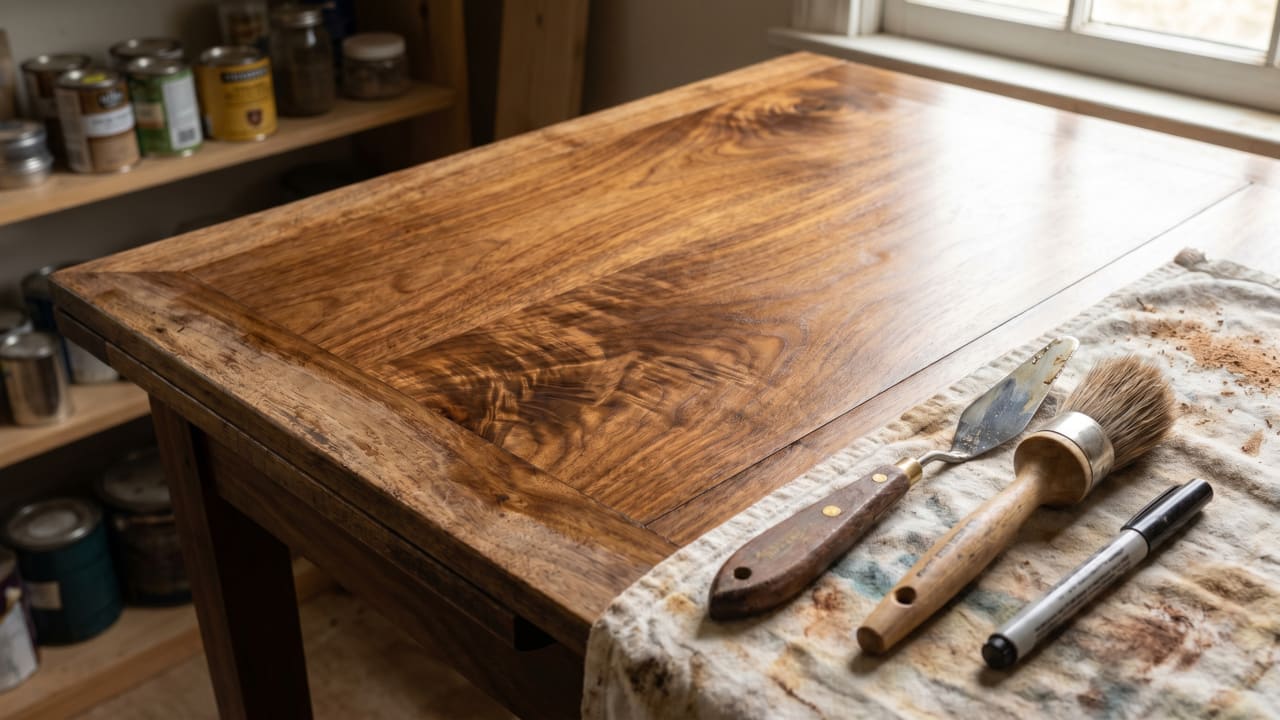
The Amish Furniture Factory’s comprehensive guide to wood furniture restoration makes a point we agree with completely: restoration should always work from least invasive to most invasive. Cleaning first, minor repairs next, refinishing only when necessary. That philosophy guides every repair decision we make at the workshop, on every piece that comes through the door.
Wood Species We Repair: Oak, Walnut, Cherry, Mahogany, and More
Different wood species behave differently under repair, and knowing the species you’re working with matters enormously. Here’s what homeowners most commonly bring us, and what the repair considerations are:
- Oak (red and white): The most common species in American furniture from the 1880s-1940s and again from the 1980s-2000s. Oak’s open grain means finish penetrates deeply, which is great for durability but requires careful stain matching on repairs. White oak is finer-grained and more water-resistant than red oak, relevant for table tops that have seen water damage.
- Walnut: A regional favorite for high-end mid-century and contemporary furniture. Walnut’s dark, rich color and flowing grain figure make finish matching one of the more demanding skills in the shop. Patch repairs on walnut require careful grain selection and custom stain mixing to blend invisibly.
- Cherry: Cherry darkens significantly with age and UV exposure, which means a repair on an old cherry piece requires understanding where the color is going, not just where it is today. We stain repair areas lighter than the current surface color, knowing they’ll darken to match over months of light exposure.
- Mahogany: True mahogany (Swietenia species from Central and South America) has an interlocked grain that can be tricky to sand without tearout. It’s beautiful wood and holds finish exceptionally well once the surface prep is right. Distinguish it from African mahogany (Khaya) and Philippine lauan, which behave differently in repair.
- Pecan and hickory: These native Texas and Southern species show up often in family pieces from ranching backgrounds. Very hard, very dense, and highly figured, which makes them visually spectacular but demanding in joint work because the hardness means old glue bonds more aggressively to the wood than it does on softer species.
- Pine: Colonial and Early American reproduction furniture, as well as a lot of country/farmhouse antiques, is pine. Pine is softer, dings and dents easily, but also takes paint and stain beautifully. Dent repairs on pine often require steaming the fiber back up before filling.
Repair vs. Replace: Making the Call for Frisco Homeowners
We get asked this question constantly: “Should I fix this or just buy something new?” Here’s our honest framework for thinking through it.
Repair almost always wins when:
- The piece is solid wood throughout
- The issue is structural (loose joints, broken leg) rather than catastrophic (completely shattered beyond splicing)
- The finish damage is cosmetic rather than requiring a full strip on a veneer piece that can’t survive sanding
- The piece has sentimental value that a new piece simply can’t replicate
- The replacement cost for a comparable-quality piece exceeds the repair cost by a significant margin, which is almost always true for pre-1980s solid wood furniture
Replacement makes more sense when:
- The piece is low-grade particleboard or thin veneer over MDF, these materials don’t accept structural repair well
- The damage is so extensive that repair costs approach or exceed replacement value
- The piece has no sentimental value and comparable new options are readily available at reasonable cost
We’ll tell you honestly which category your piece falls into. If a chair isn’t worth repairing, we’ll say so, that kind of straight advice is what keeps people coming back to us for over 45 years rather than feeling like they got talked into unnecessary work.
The Angi 2026 furniture repair cost guide provides useful national benchmarks for common repair types, but keep in mind that local labor costs and piece complexity will affect your actual quote. Our free online estimate removes the guesswork: send us photos and we’ll give you a number before anything leaves your home.
Our Repair Process: From Frisco Pickup to Carrollton Workshop and Back
If you’re wondering what working with Andrew’s Refinishing actually looks like, here’s the typical flow for wood furniture repair:
Step 1, Free online estimate: You send us photos of the piece (overall shots plus close-ups of the damage). We respond with a written estimate and our honest assessment of what’s involved. No commitment required, no hauling furniture to a showroom across the metroplex.
Step 2, Pickup: Once you approve the estimate, we schedule a pickup from your home. Our flat-rate pickup fee covers Frisco and the surrounding metro. The piece goes to our Carrollton workshop, about a 20-25 minute drive via the Dallas North Tollway or Sam Rayburn Tollway.
Step 3, Workshop assessment and repair: In the shop, we do a full hands-on assessment before any work begins. If anything changes from the photo estimate, unexpected damage found once we get the piece on the bench, we contact you before proceeding. No surprises on the final bill.
Step 4, Completion and delivery: Most repair work is completed in 2-4 weeks depending on the scope and our current workshop queue. We contact you when the piece is ready and schedule delivery back to your home.
You can review our full refinishing and repair process on the website, or see what past customers have said on our reviews page. We’ve been picking up and delivering furniture across the metro since 1980, the logistics are dialed in.
Frequently Asked Questions from Frisco Homeowners
How much does wood furniture repair cost in Frisco, TX?
Cost depends on the type and extent of the damage. Joint re-gluing on a single chair typically runs $100-$250 depending on how many joints need work and whether dowels require replacement. A broken leg with a dowel splice repair is often $150-$300. Surface scratch and finish blending on a small area can be $75-$200. A complex heirloom piece with multiple structural issues and a full refinishing might be $600-$800 or more. We provide free online estimates from photos, so you have a specific number before committing to anything.
Do you pick up furniture in Frisco, TX?
Yes. We offer flat-rate pickup and delivery throughout Frisco and the surrounding metro. Our Carrollton workshop is roughly 20-25 minutes away via the Dallas North Tollway or Sam Rayburn Tollway. We handle all the heavy lifting once your estimate is approved.
Can you repair an antique piece without affecting its value?
Yes, and this is something we take seriously. For genuinely antique or collectible pieces, we work from least invasive to most invasive, stabilizing joints, treating finish issues without full stripping, and preserving original patina where appropriate. We advise you on what level of intervention is right for your specific piece. Over-restoring an antique can reduce collector value; targeted conservation repair maintains both function and provenance.
How long does furniture repair take from Frisco?
Most repair work, joint re-gluing, finish touch-ups, broken leg repairs, is completed within 2-4 weeks from pickup. More complex jobs involving multiple structural repairs plus refinishing may take 4-6 weeks depending on the current workshop queue. We provide a realistic timeline with every estimate so you can plan accordingly.
What wood species can you repair and refinish?
We work with all common hardwoods: oak, walnut, cherry, mahogany, maple, pecan, hickory, elm, pine, and more. Each species has different finishing and repair characteristics. Our team has 45 years of experience across all these species, uncommon or challenging wood types aren’t a problem.
Serving Frisco and the Surrounding DFW Area
Andrew’s Refinishing is based at 2425 Parker Rd. Bldg. 5 in Carrollton, TX, right in the heart of the DFW metroplex. We serve Frisco homeowners with flat-rate pickup and delivery, and our service area covers the full metro. If you’re in Frisco, we also serve your neighbors in Plano, McKinney, Allen, The Colony, Lewisville, and Carrollton plus the broader Dallas, Fort Worth, and DFW area. Whether you’re near the Frisco Heritage Center, in a neighborhood off the Sam Rayburn Tollway, or in a newer development near The Star, we can pick up your piece and have it back looking right.
We’ve built relationships over the decades, interior designers who spec us for client projects, families who’ve trusted us with three generations of furniture, and estate attorneys who call us when a piece needs assessment before settlement. That depth of relationship is part of what 45 years in one place builds. No other wood furniture repair shop in the metro can say the same.
Ready to Repair Your Wood Furniture in Frisco?
If you have a piece that needs structural repair, finish restoration, or a combination of both, the first step is a free online estimate. Send us photos, overall shots plus close-ups of the damage, and we’ll give you a written assessment and price range, usually within 1-2 business days. No commitment required.
You can request a free online estimate here or call us directly at 214-731-3060. No commitment, no hauling furniture across town until you know what you’re dealing with. We’ve been restoring wood furniture for North Texas families since 1980, your heirloom is in good hands.