
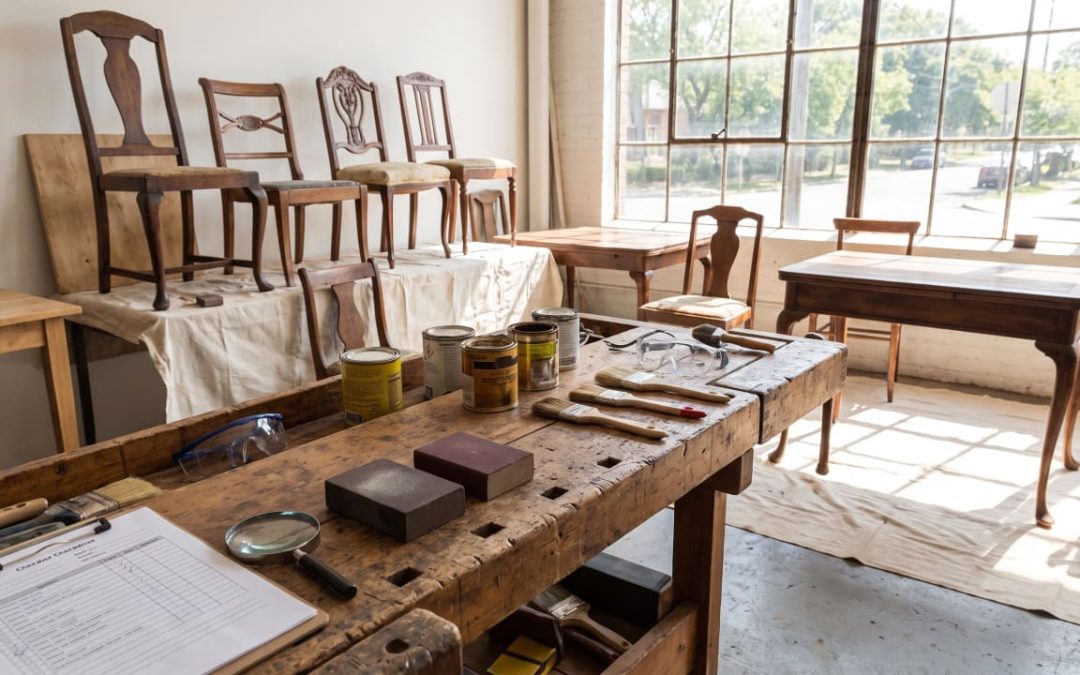
Why the Shop You Choose Matters More Than the Estimate
If you’re comparing quotes for a furniture refinishing shop in North Dallas, the estimates probably all read about the same: strip it, sand it, finish it, done. What those quotes rarely explain is how each shop actually does that work, and that gap is exactly where a piece either comes back looking like it should or comes back with a joint that’s looser than when it left your house.
We’ve run our workshop out of Carrollton since 1980, and we hear from North Dallas homeowners every week who asked a shop the right questions and got a vague answer, or none at all. Before you commit a family piece to anyone’s van, here are seven questions worth asking, along with what a shop that actually knows the craft should tell you. You can browse our full furniture refinishing services for the Dallas area for the broader picture before we walk through the specifics one at a time.
According to consumer hiring guides, the biggest mistake homeowners make is picking a refinisher on price alone without asking about process, materials, or turnaround. That advice holds just as true here as anywhere else, maybe more, since North Dallas has more mid-century and antique furniture per household than most parts of the metroplex, and that furniture doesn’t forgive careless handling.

Why This Decision Matters More in an Established Neighborhood
A lot of the furniture we see from North Dallas isn’t recent. Mid-century dressers, inherited dining sets, and cabinetry original to homes built decades ago show up in our shop regularly, and older furniture is less forgiving of a rushed or careless refinishing job than something bought last year. Solid joinery and real wood veneer, the kind that was standard decades ago, is worth protecting rather than risking on a shop that treats every piece the same way.
That’s the backdrop for these seven questions, and it’s also why we wrote a broader overview of furniture restoration in North Dallas covering repair, refinishing, and what’s actually worth saving. These questions are the next step after that. They’re not academic, they’re the difference between a piece that comes back better than it left and one that comes back with a problem you didn’t have before.
How to Choose a Furniture Refinishing Shop in North Dallas: The 7 Questions
Most of these questions take thirty seconds to ask and reveal a lot about how careful, or careless, a shop is going to be with your piece. We’ve organized them in the order we’d want a customer to ask us, and we’ve answered each one honestly based on how we actually do the work in our own shop, not how we wish we did it. That’s really what choosing a furniture refinishing shop in North Dallas comes down to: asking good questions before you hand over the piece.
1. How Do You Strip the Piece, and What Does That Do to the Wood?
This is the single most important question you can ask, and it’s the one most shops hope you don’t. Stripping method determines whether a piece keeps its structural integrity or starts to fail at the joints months later. Some shops still use a heat gun to soften old finish, which works fast but comes with real risk. Woodworking references warn that heat guns can scorch the wood and overheat the glue in mortise and tenon joints, which is exactly the kind of damage that doesn’t show up until the piece is back in your dining room and a chair leg starts to wobble.
Other shops submerge the whole piece in a stripper tank, which is fast for volume work but soaks glue joints and veneer in solvent for far longer than necessary. We don’t do either. Our shop strips with a laser stripper for detailed or carved work, and a chemical overflow method for everything else, where the stripper flows over the piece as we brush rather than pooling or submerging it. For a top-only job, like refinishing a tabletop without touching the base, we’ll sometimes use a gel stripper so the chemical stays where we put it instead of running down the legs. None of our methods involve heat guns or submersion, on purpose.
2. Do You Spray or Brush, and What Finish Do You Actually Use?
Ask what finish goes on the piece by name, not just “a protective topcoat.” Finishes behave differently, and the right one depends on the piece and how it’s used. For residential furniture we spray lacquer, which levels out smooth, dries fast enough to keep a job moving, and can be blended or repaired later without stripping the whole piece again. For commercial interiors, like a restaurant’s dining chairs or a hotel’s case goods, we typically use polyurethane or pre-catalyzed lacquer, since those pieces need to stand up to heavier daily use.
There’s a meaningful difference between the two. Lacquer dries to a smoother, glossier film and is easier to touch up later, while polyurethane forms a thicker, harder layer that resists scratches and heat better, which is why we match the finish to the piece’s job rather than defaulting to one product for everything. What you should not hear from a shop is that they use conversion varnish, gel stain, wax, or a straight oil finish on interior furniture. We don’t use any of those. On outdoor pieces the finish changes again. Teak gets either a water-based polyurethane or a hybrid wood oil, since outdoor wood needs to handle Texas humidity and sun in a way indoor furniture never will.
3. Will You Color-Match on My Actual Piece, or Just a Sample Board?
Sample boards are a starting point, not a finished answer. Wood grain, age, and prior finish all affect how a stain takes, so the only reliable way to match a color is to test it directly on the piece itself, usually in an inconspicuous spot, and adjust from there. We run test passes on the actual furniture, not just a chip off a board, and it’s normal to go through three to six passes before a color is dialed in on an older piece with uneven grain or sun exposure.
One thing worth knowing before you ask: we can only stain as light as the bare wood allows. If you’re hoping to go noticeably lighter than the wood’s natural tone, that’s not something staining alone can do, and any shop that promises otherwise is setting you up for disappointment. A shop that explains this limitation up front, instead of promising a perfect match sight unseen, is one that’s dealt with enough real furniture to know better.

4. What’s the Realistic Lead Time, and Does It Change by Season?
Lead time answers separate honest shops from ones telling you what you want to hear. Standard furniture refinishing at our shop runs 5-6 weeks, and a single piece typically takes 4-6 weeks depending on its condition and how much stripping and repair it needs. A full kitchen’s worth of cabinets is a different animal. Because the boxes stay in your kitchen while doors and drawers come to the shop, whole-kitchen refinishing usually wraps up in about two weeks.
Spring and fall are our busiest seasons, since that’s when most North Dallas homeowners tackle furniture projects alongside other home updates, so lead times can run toward the longer end of the range during those months. A shop that gives you the exact same turnaround time in March that they give you in July either isn’t being straight with you or isn’t busy enough to be good.
5. Is the Estimate Binding, or Will I See Add-Ons Later?
A refinishing quote should reflect what the job actually costs, not a lowball number designed to get your piece in the door before the real price shows up. We quote from photos through our free online estimate tool, and that number is binding. If we get the piece in and find something the photos didn’t show, like hidden rot or a repair that’s more involved than expected, we call you before doing anything extra, not after.
For reference, refinishing jobs generally start around $600, a single dining chair typically runs $275-$375, and a full dining set with six chairs usually falls between $2,500 and $4,000 depending on wood species and condition. Basic repairs that don’t involve a full refinish carry a $125 shop minimum. Ask for numbers like these up front. A shop that won’t give you a range until they see the piece in person is being reasonable. A shop that won’t give you a range at all is a red flag.
6. Is the Work Done In-House, or Does It Go to a Subcontractor?
This matters more than most homeowners realize. If a shop farms out the actual refinishing to a third party, you lose visibility into who’s handling your piece and what standards they’re working to. Our refinishing and repair work is always done in-house at the Carrollton shop, by the same team, start to finish. Upholstery is the one exception where we’ll occasionally bring in outside help during our busiest stretches, but stripping, staining, structural repair, and finishing never leave our building.
Ask specifically where the work happens. A shop that’s vague about this, or that quotes you a price and then ships your furniture off to a facility you’ve never heard of, is a shop where accountability gets harder to pin down if something goes wrong.
7. What Happens If My Piece Is Veneer, Particleboard, or Laminate?
A lot of North Dallas furniture from the 1960s through the 1980s is particleboard or MDF with a real wood veneer on top, and that’s often better-built than it gets credit for. We refinish that kind of piece regularly, and it makes up a meaningful share of our workload. What we can’t do is refinish particleboard that has laminate, meaning a plastic surface rather than a real wood veneer, over the top, and we can’t structurally repair a particleboard or MDF core if it’s cracked or crumbling. The core material just won’t hold a repair the way solid wood does.
A shop that tells you “we refinish everything” without asking what your piece is actually made of either doesn’t know the difference or isn’t being upfront about it. Bring a photo, or better yet, check the underside or an inside edge to see what you’re working with before you call anyone. It’ll save you a wasted trip either way.
What a Real Answer Sounds Like
None of these seven questions are complicated, but the answers separate a shop that treats your furniture like inventory from one that treats it like a piece with a history. Our shop was started by our founder John in 1980 and has been passed down through the family since, now run by his son Simon, and forty-five years in the same trade means we’ve had time to build habits around getting these answers right instead of just sounding right.
If you want to see the process in more detail before you call anyone, our step-by-step breakdown of our workshop’s refinishing process walks through stripping, staining, and finishing in the order it actually happens on the shop floor.
One more data point worth having in your back pocket. Industry research shows Americans send millions of tons of furniture to landfills every year, and restoring a solid piece keeps it out of that pile while usually costing less than buying comparable quality new. That’s not a reason to restore everything, but it’s a reason to at least get an honest answer before you assume replacement is the only option.
If cabinets are part of what you’re weighing, the same seven questions apply almost word for word since it’s the same finishing process on a larger scale. We’ve covered that decision specifically in our guide to cabinet refinishing versus replacement in North Dallas.
Serving North Dallas and the Surrounding DFW Communities
We serve North Dallas homeowners from our Carrollton workshop, along with the surrounding communities of Addison, Farmers Branch, University Park, Highland Park, and Richardson. Wherever you’re located in the DFW metroplex, we offer pickup and delivery for furniture refinishing and repair, and photo-based estimates make it easy to get a real answer before anything leaves your house.
Frequently Asked Questions
How much does furniture refinishing cost in North Dallas?
Refinishing jobs typically start around $600, with a single dining chair running $275-$375 and a full six-chair dining set landing between $2,500 and $4,000 depending on wood species and how much repair the piece needs. Basic repairs that don’t need a full refinish carry a $125 shop minimum. Every quote comes from a free online photo estimate, and that number is binding once we see the piece.
How long does furniture refinishing take?
Standard refinishing runs 5-6 weeks, and a single piece typically takes 4-6 weeks depending on condition. Whole-kitchen cabinet refinishing is faster, usually wrapping up in about two weeks since the boxes stay in place while doors and drawers come to the shop. Spring and fall tend to run toward the longer end of those ranges.
Can you match my furniture’s original color exactly?
A close match is realistic, but an exact match depends on the wood, its age, and how much sun or wear it’s seen. We color-match on the actual piece rather than a sample board, usually running several test passes before we’re satisfied. One limit to know going in: we can only stain as light as the bare wood allows, not lighter than the wood’s natural tone.
Do North Dallas customers get pickup and delivery service?
We offer pickup and delivery across the DFW metroplex, including North Dallas, generally starting around $250 round trip depending on distance and job size. For cushion-only jobs, we usually recommend dropping the piece off at the shop instead, since it keeps the turnaround simpler.
Ready to Get Your Piece Refinished the Right Way?
The right shop won’t dodge any of these seven questions, and the answers should sound specific, not rehearsed. If a shop can tell you exactly how they strip a piece, what finish goes on it, and how they handle color matching on wood that’s decades old, you’re probably in good hands.
If you’re ready to find out what your piece needs, North Dallas homeowners can request a free online estimate from our Carrollton workshop, or call us directly at 214-731-3060. We’ve been answering these seven questions honestly since 1980, and we’re glad to answer yours too.