
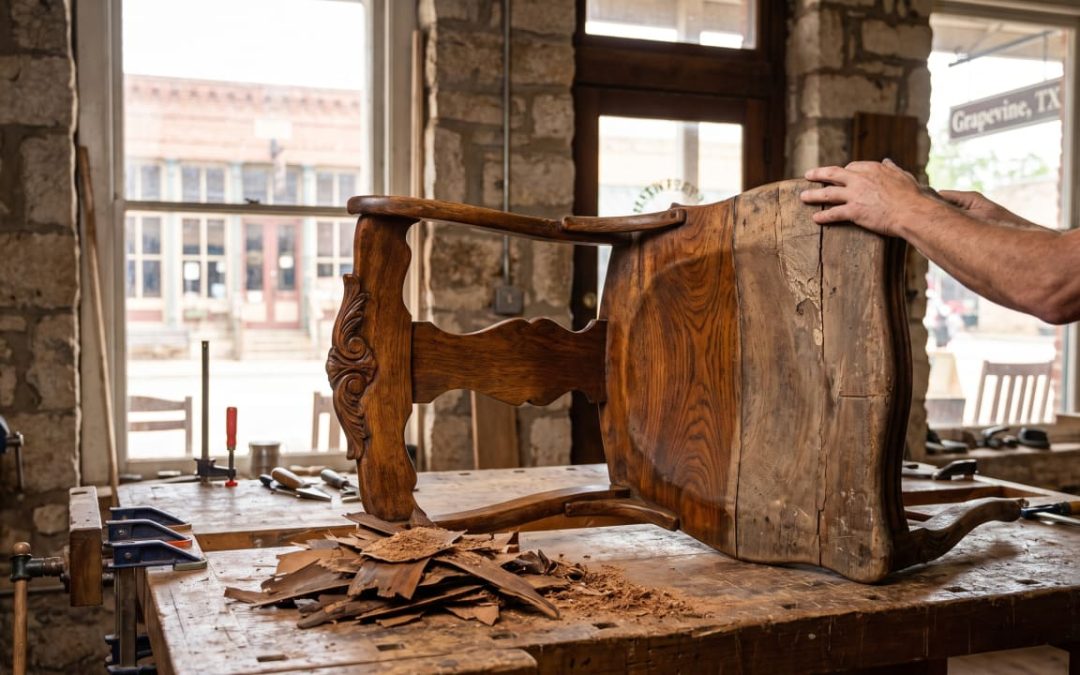
A piece of furniture that has outlived two moves and a few decades of family dinners usually does not need replacing. It needs someone to look at it honestly and decide what it actually needs. That is what furniture restoration in Grapevine, TX comes down to: a straight read on the joints, the finish, and the wood underneath, followed by the right amount of work and no more. Our Carrollton workshop has done that for DFW families since 1980, and we handle furniture repair and restoration across Dallas-Fort Worth every week.
Grapevine is a good place to own old furniture, and Grapevine homeowners tend to hold onto it. Between the brick storefronts of Main Street and the established neighborhoods around it, plenty of homes here hold inherited tables, hutches, and bedroom sets that deserve a second life. The city’s downtown is a National Register of Historic Places district, and that appreciation for things made to last tends to carry into how people treat what is inside their homes. This guide explains what restoration really involves, what it costs, how long it takes, and how to tell whether your piece is worth the investment.
What Furniture Restoration Actually Means
“Restoration” gets used loosely. In our shop it is an umbrella over three kinds of work, and most pieces need a mix of them.
- Repair: fixing what is structurally wrong. Loose joints, split rails, broken legs, missing dowels, lifted veneer, and worn cane or rush seats all fall here.
- Refinishing: removing a tired, damaged, or sun-faded finish and applying a new one. This is the step that changes how a piece looks on the day it comes home.
- Reupholstery: new fabric, padding, and sometimes new foam on a frame worth keeping.
A dining chair with a wobble and a ring-stained seat is a repair plus an upholstery job. A hutch with a clouded finish and a sagging shelf is repair plus refinishing. Telling the difference before any work begins is the first thing a good shop does. If you want the full sequence from intake to delivery, our walkthrough of the Carrollton workshop’s refinishing process shows each stage.
Why Grapevine Households Restore Instead of Replace
There are three reasons the restore-it decision keeps winning. First, construction. A great deal of furniture from the 1950s through the 1980s is solid wood or good veneer over a stable core, with real joinery. Comparable new pieces in solid wood cost more than most refinishing jobs, and mid-tier new furniture is often built with staples and particleboard that cannot be repaired when it fails. Second, fit. An older dining table that already matches your room, your chairs, and your family history is hard to buy again at any price. Third, sentiment. When a table carried holidays for forty years, the math is not purely financial, and we factor that in when we help you decide.
Grapevine’s own story reinforces the point. According to the Grapevine Commercial Historic District record, much of the downtown’s brick commercial architecture dates to the late nineteenth century, after the railroad arrived in 1888. A community that has spent decades keeping its old buildings in service understands that well-made things can be renewed rather than discarded.
How We Restore Wood Furniture at the Shop
Every piece gets looked at the same way: what is the wood, what is the finish, and what has failed. From there the work follows a predictable path.
Stripping the Old Finish
We remove old finish with a laser stripper or with a chemical overflow method, where the stripper flows over the piece as we work it with a brush. This approach keeps joints tight, protects the glue lines, and is gentle on thin veneer. For a table where only the top needs work, we use a gel stripper so nothing runs down the legs.
Staining and Color Matching
Color is the part customers worry about most, and it should be handled on the real piece rather than on a sample board. We apply test passes directly to your furniture and refine them until the color reads right in your room’s light. Expect several passes to dial it in, which is normal. We use a dye-plus-pigment stain system that gives even color on woods that tend to blotch, such as cherry and maple. The bare wood sets the range: if your piece is a deep brown now, we can take it as light as the natural wood allows, and we will show you where that point sits on your own piece.
The Topcoat
Residential pieces get lacquer, which cures hard, repairs well later, and holds up to daily use on dining tables and dressers. Commercial interior pieces get polyurethane or pre-catalyzed lacquer. Outdoor furniture gets a water-based polyurethane or a hybrid wood oil. Because tops take the most abuse, we always refinish a table or dresser top completely rather than spot-treating a scratch. A patched top shows a different sheen in raking light, and it never satisfies anyone for long.
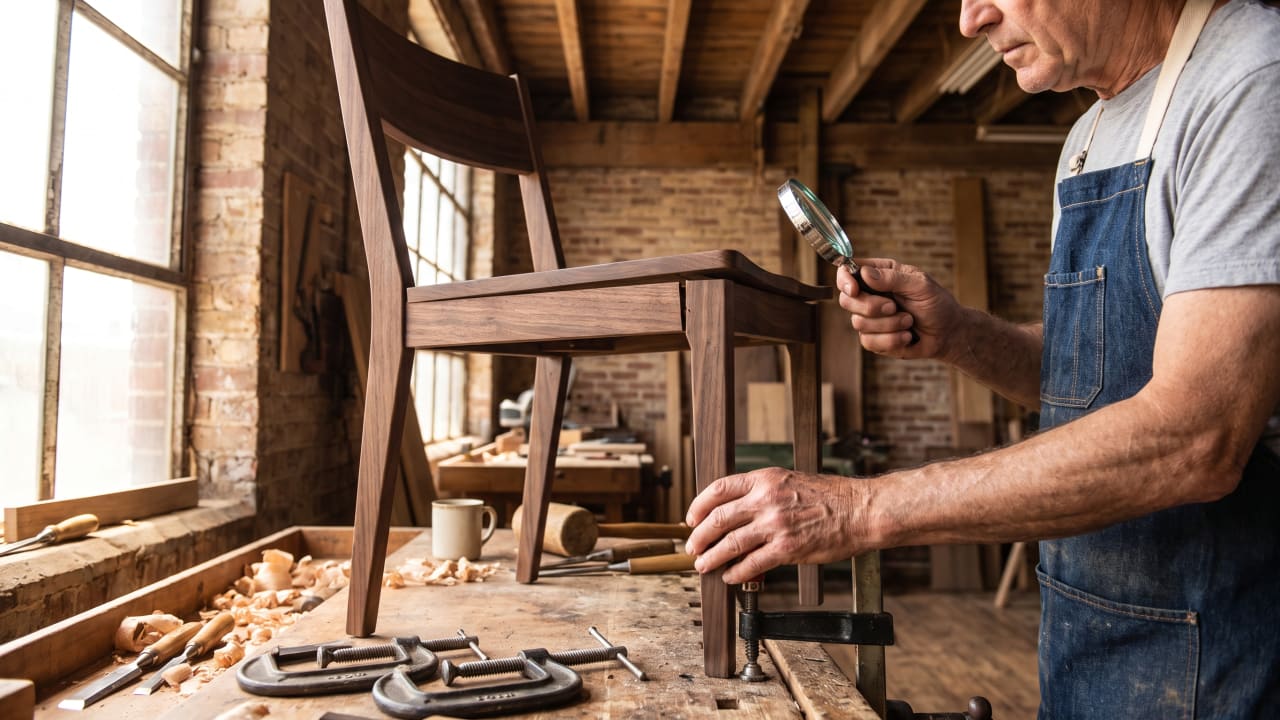
Structural problems get fixed before any finish goes on. If your chair rocks or a rail has pulled loose, see our explanation of re-gluing, doweling, and reframing wobbly chairs, since the same methods apply to any loose-jointed piece. Deep gouges are filled with a two-part epoxy, and lifted or missing sections of veneer can be reattached or patched. Lifted or missing sections of veneer are a routine repair, and we will tell you plainly what condition your piece is in before any work begins.
What Texas Heat and Dry Air Do to Furniture
Wood moves with moisture. North Texas summers push air conditioners hard, and the swing from humid outdoor air to dry conditioned air is exactly what loosens joints and cracks finishes over time. Conservation guidance from the Canadian Conservation Institute on basic care of wooden furniture stresses a stable environment above all else, and it recommends keeping pieces out of direct sun and away from heat vents and radiators.
In practical terms, that means a few habits worth adopting between restorations:
- Pull pieces back from sunny windows. Light damage to a finish is cumulative, and a west-facing window will fade a tabletop in a few summers.
- Keep furniture off air vents. A cabinet sitting over a supply register gets blasted with dry air all season.
- Use pads and coasters. Heat and moisture rings are the most common damage we see on dining tables.
- Skip the garage for storage. Temperature swings are harsh on glue joints and finishes.
The Canadian Conservation Institute’s note on care of furniture finishes adds that dusting with a soft cloth is usually all a finished surface needs. Resist the urge to layer on polishes, which build up and can make a later refinish more involved.
Common Damage We See and How We Handle It
Most pieces arrive with one of a handful of problems. Knowing which one you have makes the estimate conversation faster and the result better.
Heat and Moisture Rings
White rings and cloudy patches mean moisture or heat has gotten into the finish. Dark rings that sit deeper mean the moisture reached the wood itself. In both cases the lasting fix is a full refinish of the top, since a spot repair rarely blends. A dining table with a ruined top and a sound base is one of the most satisfying jobs we do, and the result is a surface that handles daily meals again.
Sun Fade and Finish Failure
A finish that has turned chalky, peeled, or gone amber on the window side has usually reached the end of its life. We strip it completely, check the wood, and rebuild the color and the protective coat from scratch. This is also where we can often improve a piece, since a thin, tired factory finish gets replaced by a durable lacquer.
Loose Joints and Failed Glue
Chairs take the worst of it. Every time someone leans back or shifts weight, the joints flex, and over years the glue lets go. A proper repair separates the joint, cleans out the old adhesive, and re-glues it, adding dowels where the original ones have worn. Driving a screw into a failing joint hides the problem for a month and then makes it worse.
Worn Cane and Rush Seats
Cane and rush seats stretch, sag, and eventually break through. We replace both, and a fresh seat on a good chair frame makes a set of dining chairs feel new. Cane and rush work pairs naturally with a refinish, so the seats and the frame come back matching.
Is Your Piece Worth Restoring? Costs and Timelines
If you are weighing a Grapevine heirloom against a store-bought replacement, the honest answer depends on construction, condition, and what the piece means to you. Solid wood and real-wood veneer over particleboard or MDF are both good candidates, and veneered pieces make up a big share of our jobs. Laminate over particleboard is the one construction we cannot refinish. And when a piece does not pencil out financially, sentimental value can still make the job worthwhile.
For planning purposes, these are typical starting ranges. Your final number comes from a photo-based estimate, never a guess.
- Basic repairs start at the $125 shop minimum.
- Refinishing jobs start around $600.
- A single dining chair refinish typically runs $275-$375.
- A dining table top with a standard finish is about $120 per running foot.
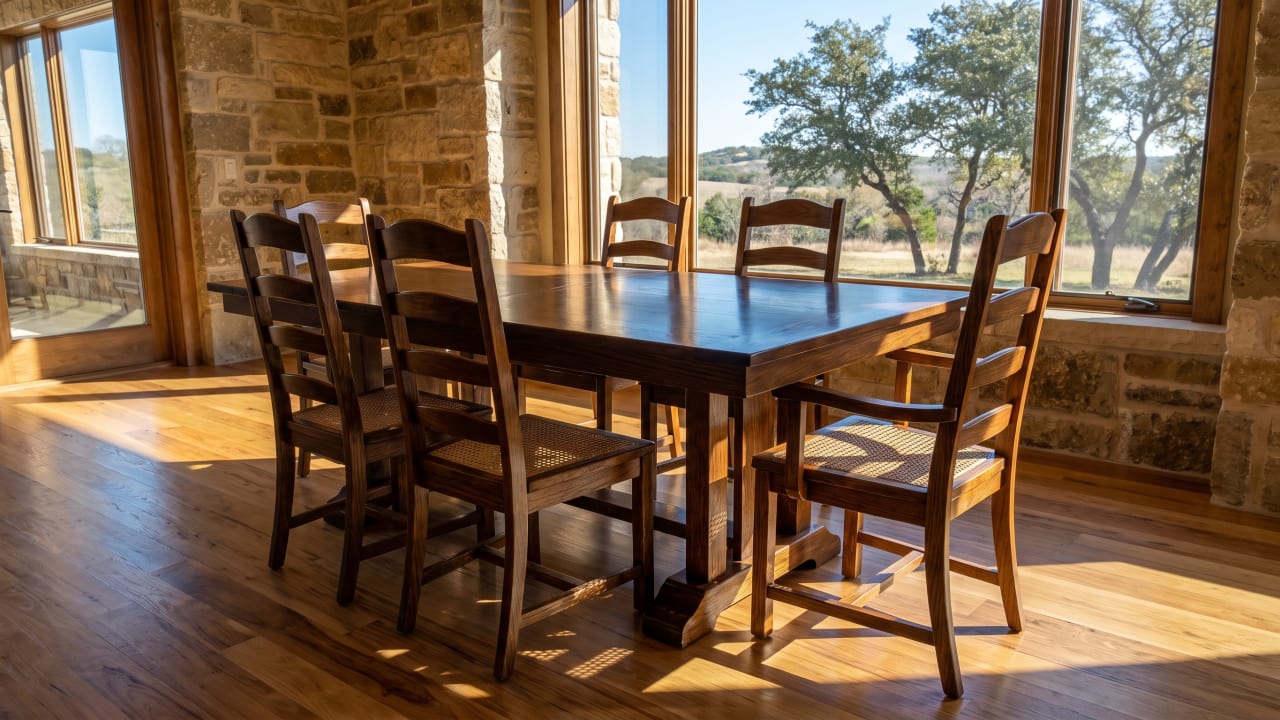
- A full dining set with six chairs typically runs $2,500-$4,000.
- A dresser or hutch typically runs $1,200-$2,200, and a nightstand starts at $650.
Standard furniture refinishing takes about 5-6 weeks, and single pieces typically run 4-6 weeks, sometimes longer in busy seasons. If your piece needs new upholstery too, plan on 6-12 weeks depending on our workload. For a detailed look at how scope drives price, our cost breakdown for furniture refinishing across Dallas-Fort Worth walks through it piece by piece.
When the Frame Is Worth Keeping but the Fabric Is Done
Chairs and sofas often come to us because the wood is sound and the seat is not. Reupholstery is a real investment, so the frame has to earn it. Sofa reupholstery typically starts around $2,500 including fabric, with labor beginning near $1,500. A skirted club or wingback chair runs about $650-$900 in labor plus roughly $700 in fabric.
The order of operations matters. You choose fabric from our Greenhouse Fabrics swatch books and place the deposit before pickup, so the material is ordered and on the shelf when we are ready to start. Ordered fabric takes about a week to arrive. For fabric durability, we suggest 30,000 Martindale rubs or higher for a regular-use sofa, 50,000 or more for high-traffic rooms, and we use 100,000 or higher on commercial work. You can also supply your own material for a $35 per yard handling fee. Our upholstery services page covers the full range.
Getting Furniture from Grapevine to Our Workshop
You have two easy options. Many customers bring smaller pieces and chairs to our shop at 2425 Parker Rd. in Carrollton, and for cushion-only work we prefer drop-off. For large dining tables, hutches, and sofas, we offer pickup and delivery across the metroplex, which starts at $250 round trip and is quoted upfront in your estimate. You can find directions and hours on our location and contact page.
Grapevine pieces often arrive with a story attached: a hutch bought near Main Street decades ago, a bedroom set carried over from a first home, or a farmhouse table that has hosted every Thanksgiving since. We photograph and note each piece at intake, including existing repairs, so the restored furniture comes home matching what you remember and looking better than the day you dropped it off. Seasonal events and a busy holiday calendar in Grapevine mean many customers want pieces back before guests arrive, so share your target date with your estimate and we will tell you honestly whether it fits our schedule.
The process starts with photos. Send a few clear shots of the whole piece, the damaged area, and any maker’s marks through the online form, and we respond with an estimate. The photo estimate is free. You can learn what the job involves without disassembling anything or scheduling a visit.
Furniture Restoration in Grapevine, TX: Common Questions
How much does furniture restoration cost in Grapevine?
Basic repairs start at a $125 shop minimum, and refinishing jobs start around $600. A single dining chair typically runs $275-$375, and a full dining set with six chairs generally lands between $2,500 and $4,000. A free photo estimate gives you a firm number for your specific piece.
How long does restoration take for a Grapevine homeowner?
Standard furniture refinishing takes roughly 5-6 weeks, and single pieces typically take 4-6 weeks. Reupholstery takes 6-12 weeks depending on our workload at the time. Spring and fall are our busiest seasons, so book early if you need a piece back for a holiday.
Do you pick up furniture in Grapevine?
Yes. Pickup and delivery are available across the metroplex starting at $250 round trip, depending on distance and job size. For cushion-only jobs we prefer that you drop the cushions at our shop.
Can you refinish furniture that has a veneer top?
Yes, as long as the veneer is real wood. Particleboard or MDF with a real wood veneer is something we refinish regularly. Lifted or missing veneer sections are repairable. The one exception is laminate over particleboard, which is not something we refinish.
Can you match the color of my existing furniture?
We match color on the actual piece with test passes rather than relying only on sample boards. Several passes are normal. Your color can go as light as the natural wood allows.
Serving Grapevine and the Surrounding DFW Area
We serve Grapevine homeowners and businesses, plus neighbors in Southlake, Coppell, Flower Mound, Irving, and Lewisville. Whether your piece is a family dining set or a cabinet from an estate, the process is the same.
Start with a Free Online Estimate
Good furniture is worth keeping, and a good restoration should leave it looking like itself, only better. If you have a piece in Grapevine you have been debating, request a free online estimate with a few photos, or call us at 214-731-3060. We will tell you what it needs, what it costs, and whether it is worth doing. Founded by Andrew’s father John in 1980 and passed to his son Simon, our family-owned shop has been answering that question for customers across the metroplex for more than forty years.