
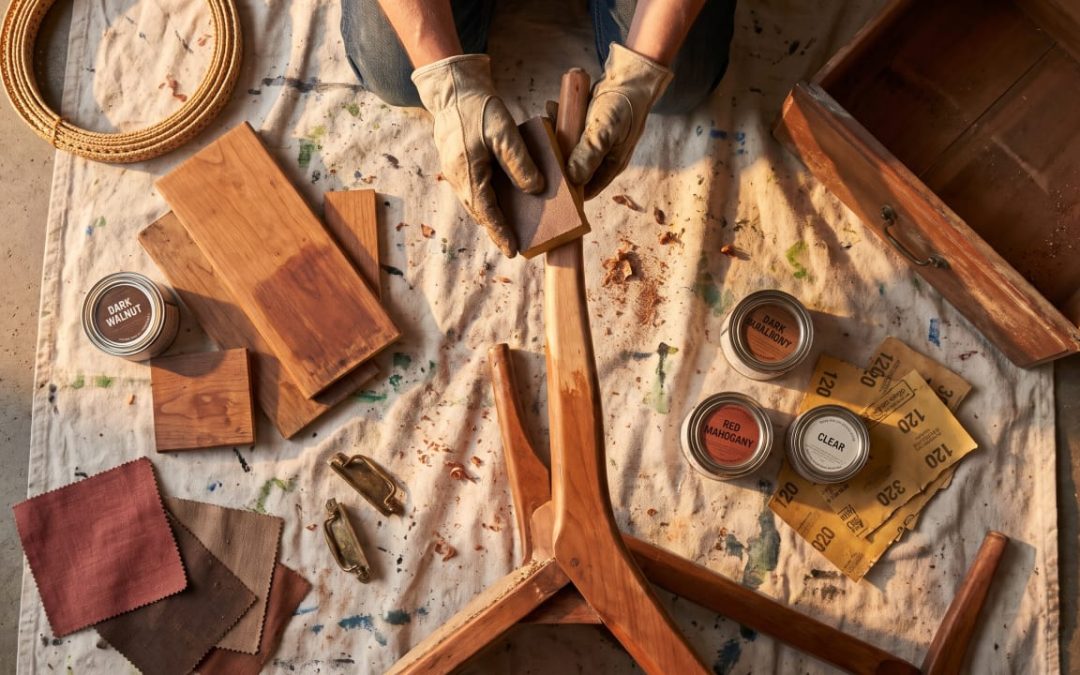
Cherry is the wood that changes its mind. A new cherry dresser leaves the factory a pale salmon pink, and twenty years later it sits in a bedroom glowing the color of old whiskey. If you have inherited a cherry bedroom set or bought a Queen Anne table at an estate sale, you already know the look. What you may not know is that the color you see today is only one stop on a long journey, and that the way you refinish the piece decides where it goes next.
We have been refinishing furniture across the metroplex since 1980, and cherry pieces from Frisco homes come through our Carrollton workshop all the time. Most owners have the same questions: why is one drawer front darker than the rest, why does the top look faded next to the sides, and can we bring back the color without making it look painted? This guide answers those questions for anyone considering cherry wood refinishing in Frisco, TX, and explains how our Dallas-Fort Worth furniture refinishing service handles a wood this sensitive.
If you would rather see what we do for your own neighborhood first, our Frisco furniture refinishing page covers pickup, timing, and the basics of the process.
Why Cherry Looks Different Every Decade
American black cherry (Prunus serotina) is prized for its fine, even grain and warm reddish tone. The Wood Database notes that black cherry heartwood darkens to a rich reddish brown with age and exposure to light, and that is exactly what makes it both loved and tricky. The heartwood starts pale, and the natural extractives in the wood oxidize slowly. Light accelerates the process, which is why a cherry table can look two different colors on the same day.
Walk through any older home and you will see the evidence. The top of a sideboard that has sat across from a window is deep, almost chocolate. The underside of a drawer that has never seen daylight is still a pale pink. A lamp base or a stack of books that has covered one spot for years leaves a lighter ghost behind. None of this is damage. It is the wood doing what cherry has always done.
Understanding this matters before any refinishing starts, because the original finish and the color in the wood are two separate things. Over the decades, cherry furniture was often finished in a tinted topcoat that added its own amber layer on top of the natural darkening. When we strip the old finish, we are removing that layer and revealing what the wood itself has become. Sometimes the surprise is pleasant. Sometimes the wood underneath is much lighter than the owner remembers, and that is a conversation worth having early.
A Rough Timeline of Cherry Color
- New: pale pink to light salmon, with creamy sapwood streaks sometimes visible.
- First one to three years: a noticeable shift toward a warmer red-orange as light reaches the surface.
- Ten to twenty years: a deep reddish brown, usually uneven where objects or sunlight have shaded parts of the piece.
- Forty years and beyond: a dark, mellow brown that reads as antique, with the exposed surfaces darkest.
Those ranges are general. Humidity, window exposure, and the original finish all shift the timeline, so treat it as a guide, not a schedule.
What Texas Sun and Frisco Homes Do to Cherry
North Texas gives cherry plenty of reasons to change quickly. Many newer Frisco homes have large windows, open floor plans, and two-story living areas that let in strong afternoon light. A cherry hutch or console in a room like that can darken a full shade or two in just a few years, while a matching piece in a shaded hallway barely moves. Owners often end up with a set that no longer matches itself.
The Forest Products Laboratory explains in its Wood Handbook that wood changes color as light and oxygen act on the chemistry of its surface. Cherry is simply one of the species where the shift is easiest to see. Dry winter air from a heating system and the swing between a cool house and a hot garage can also stress an old finish and make the surface look cloudy or dull, which hides the real color underneath.
Another thing we see often is the mixed set. Someone buys a cherry dining table new and adds two matching chairs years later. The table has darkened, the chairs are still light, and the room never looks quite right. Refinishing the whole group gives you the chance to bring everything to a single color instead of living with the mismatch.
How We Strip and Prepare Cherry
Cherry rewards a patient hand. Our first step is removing the old finish, and for most pieces that means our laser stripper, or the chemical overflow method, where stripper flows over the surface while we brush it away. Both approaches lift the old finish without driving moisture deep into the grain. For a table where only the top needs work, we use a gel stripper so it stays on the top and does not run down the legs.
After stripping, the piece is hand-sanded through progressively finer grits. Cherry has tight pores, so the sanding stage is where a good result is made or lost. Scratches left from a coarse grit show up the moment stain goes on, and they glow under the finish. We spend time on this step because the wood will not hide mistakes.
This is also the moment we evaluate the real condition of the wood. We look for water rings that have gone through the finish, the dark gum pockets cherry sometimes has, loose joints, and any lifted veneer on the case sides or drawer fronts. Repairs happen before color goes on, so the stain does not have to work around a problem. Our furniture repair team in Dallas-Fort Worth handles joints, legs, and veneer work in the same shop, which keeps the whole project under one roof.
If your piece has a cousin in another wood, you might also enjoy our write-ups on color-matching walnut heirloom sets and why oak takes stain differently. Each species has its own personality at the bench.
Color Matching on the Actual Piece
The single most important rule in refinishing cherry is this: you can only go as light as the raw wood allows. Stain adds color, it does not take it away. A piece of cherry that has aged to a deep brown and been stripped back will not return to the pale pink of showroom day, and a good refinisher will tell you that up front.
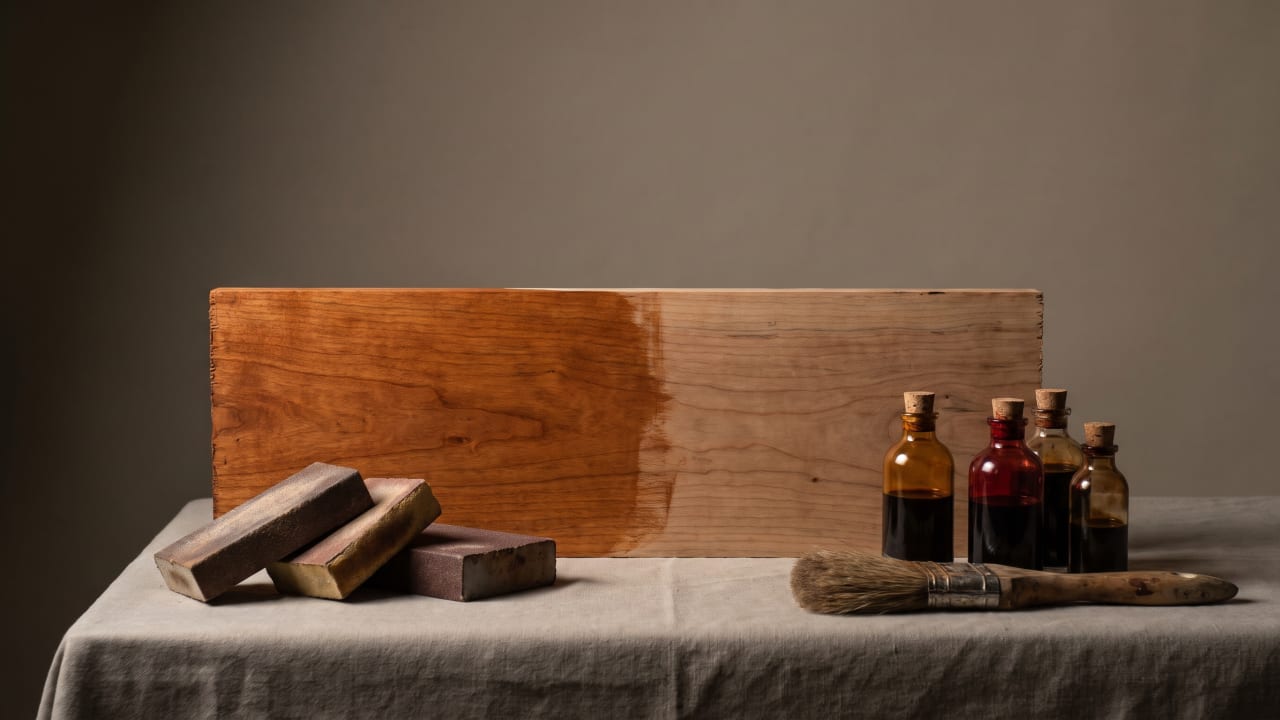
What we can do is bring the color where you want it within the wood’s natural range. For that, we build the shade with a dye plus pigment stain system rather than a single heavy coat. Dye gives clarity and lets the cherry grain show through. Pigment adds body where the wood is lighter or patchy. Layering the two lets us nudge the tone warmer, deeper, or more even without covering the figure that makes cherry beautiful.
We also match color on the actual piece, not only on a sample board. A board tells you what a stain does on one scrap. It does not tell you how it behaves on the quarter-sawn side of your chest or the end grain of your table leaf. So we apply test passes right on the furniture, step back, look at them in different light, and adjust. Expect three to six passes to dial in a match. If you are trying to blend a new piece into an existing set, bring a photo of the set in natural daylight, because lamps and bulbs distort warm tones badly.
Choosing a Direction
Most cherry owners land in one of three places. Some want to keep the aged, mellow brown and simply refresh it. Others want a warmer, redder tone closer to what the wood looked like in its prime. A third group wants a deeper, darker color to unify a mismatched set. All three are achievable on cherry, and we help you decide by looking at the piece with you under your own room light.
Handling Blotching and Uneven Absorption
Cherry has a reputation for blotching, where stain soaks into some areas more than others and leaves a dark, spotty look. It comes from variation in density across the board, especially near knots, sapwood, and around the grain swirls at a drawer front. General wood finishing references discuss how wood density and grain orientation change how a surface takes a coating, and cherry is a textbook example.
Our approach is to control the absorption before the color goes on. Careful preparation of the surface, light-handed dye application, and building the shade gradually all help the cherry take color evenly. It is slower than a single wipe-on coat, but the result looks like cherry instead of a muddy stain.
If you have already tried a refresh on a piece and ended up with dark patches, bring it to us. Stripping back to clean wood and starting again is usually the cleanest fix, and cherry tolerates it well when it is done by hand with care.
We finish residential cherry in lacquer, which builds a clear, hard film that protects the wood and lets the color read cleanly. Lacquer also ages gracefully. It keeps the surface looking like wood instead of a plastic coating, and it gives cherry the slow, warm glow people love.
For a closer look at how cherry behaves when it is far along in its aging, read our cherry refinishing story from Dallas, where we worked on inherited pieces with the same questions about color.
Cost and Timing for Cherry Pieces
Every cherry job starts with a free photo-based estimate, and the final quote depends on size, condition, and the amount of repair. As a general guide, refinishing jobs start at $600. A single dining chair typically runs $275 to $375, a nightstand starts around $650, and a dresser or hutch commonly falls between $1,200 and $2,200. A full dining set with six chairs generally lands between $2,500 and $4,000. Tabletops are always refinished in full, which keeps the color consistent across the whole surface.
Plan on roughly five to six weeks for standard furniture refinishing, and add time if the piece needs structural repair first. We offer pickup and delivery across the metroplex, starting around $250 round trip, with the exact fee quoted in your estimate before anything is scheduled.
Worth it? Cherry is often solid wood with real value, and many Frisco families hold pieces with sentimental weight as well. Even when the numbers alone do not make the case, a grandmother’s bedroom set or a dining table with decades of holidays on it can justify the work. We are happy to talk through that honestly.

Cherry Wood Refinishing FAQs for Frisco Homeowners
Will my cherry furniture in Frisco keep getting darker after refinishing?
Yes, to some degree. Cherry continues to deepen with light exposure, even under a protective finish. Lacquer slows the process but does not stop it. Rotating accessories on the surface and avoiding long direct sun on one side helps keep the color even over the years.
Can you make dark cherry lighter?
Only as light as the raw wood underneath allows. After stripping, we can see exactly how much range the cherry has, and we will show you test passes on the piece itself before committing to a color.
How long does cherry wood refinishing take for a Frisco customer?
Most standard furniture refinishing takes about five to six weeks, with larger sets or pieces needing repair running longer. Fall is a busy season before the holidays, so earlier requests get scheduled sooner.
How can I match a refinished cherry table to chairs I am keeping?
The best option is to refinish the table and chairs together so they are brought to the same color. If that is not possible, send photos in natural daylight and we will test color passes on the actual table until it blends with the chairs you plan to keep.
How much does it cost to refinish a cherry dresser near Frisco?
A dresser or hutch commonly runs between $1,200 and $2,200, depending on size and condition. The fastest way to get an exact number is our free online estimate with a few photos.
Where We Serve Around Frisco
Our Carrollton workshop sits a short drive from Frisco, and we serve Frisco homeowners along with neighbors in Plano, McKinney, Allen, Carrollton, and Dallas. If you are elsewhere in the metroplex, we still pick up and deliver across DFW.
Let Us Look at Your Cherry
Cherry is a wood that tells its own story through color, and a good refinish respects that story instead of erasing it. Knowing how the wood ages, what the stripped surface will look like, and how far the shade can move before work begins takes the guesswork out of the project.
Frisco homeowners can request a free online estimate with a few photos of the piece, or call the shop at 214-731-3060 to talk it through with someone who has been working with cherry for decades.