
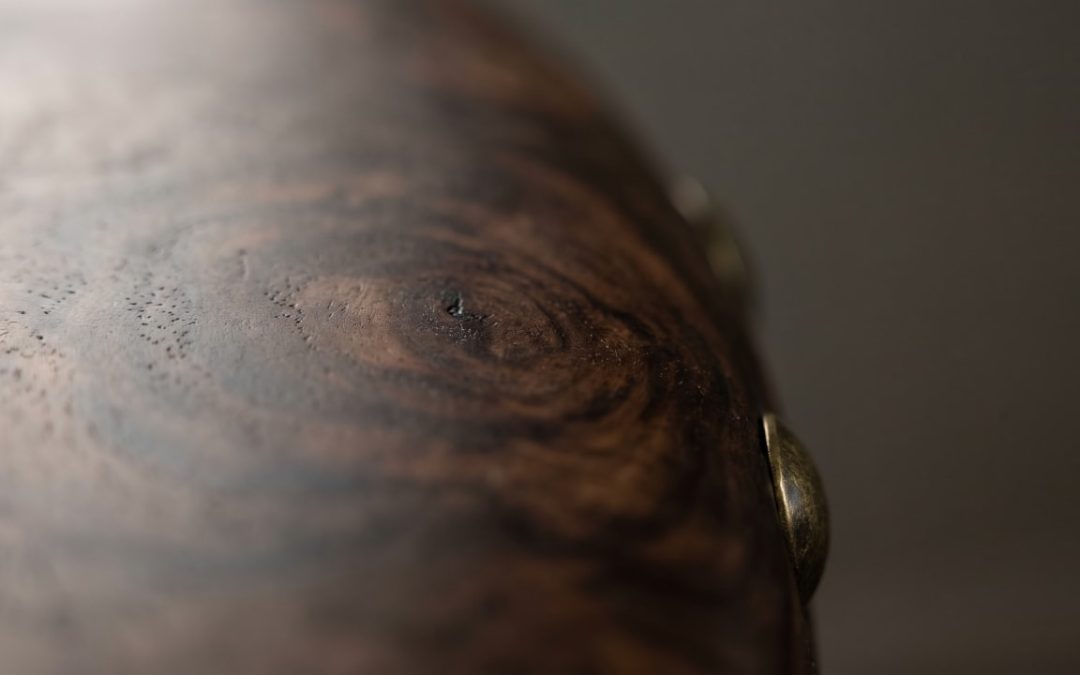
A custom credenza in book-matched walnut burl does not behave like a mall-store dresser. The veneer is thin and expensive, the finish was chosen to glow rather than just protect, and the upholstery on the matching chairs probably took a designer weeks to specify. When something like that gets scratched in a move, sun-faded by a west-facing window, or stained at a dinner party, the repair has to respect every one of those decisions. That is the standard behind luxury furniture restoration in Westlake, TX, and it is how our Carrollton workshop approaches the high-end pieces that come out of the estates around Vaquero and Glenwyck Farms.
Andrew’s Refinishing has worked on North Texas furniture since 1980, and the family-owned shop is a short drive up the corridor from Westlake. Our DFW furniture refinishing service is the backbone of what we do, and this guide explains how we adapt it for designer and custom pieces: fine veneers, exotic woods, specified fabrics, careful handling, and color matching done on the real furniture. If you own antiques, our separate antique restoration guide for Westlake collectors covers that side. When you are ready to talk specifics, a free online estimate only needs a few photos.
What Luxury Furniture Restoration Means for Westlake Homes
“Luxury” is not about price tags for us. It is about how many decisions are baked into a piece and how little room there is for error. Westlake homes tend to be large, custom-built, and furnished over many years with a mix of designer showroom purchases, commissioned cabinetry, and inherited pieces. The common thread is that nobody wants a visible repair. A guest should not be able to tell which leg was re-glued or which drawer front was refinished.
The pieces we see most often from this kind of home fall into a few groups:
- Custom casegoods such as built-to-order credenzas, bars, and sideboards in figured veneers.
- Designer dining tables and chairs with exotic wood tops, banded inlays, or sculpted bases.
- Specified seating, including sectionals, channel-back chairs, and banquettes in performance or textured fabrics.
- Bedroom suites, including headboards and nightstands that were finished to match each other.
- Pieces with family history that sit beside the designer furnishings and need to look like they belong.
What these have in common is that the original maker or designer set a bar. Our job is to return the piece to that bar, or as close as the material allows, and to be honest early about the cases where it cannot get all the way back.
Fine Veneers and Exotic Woods: Reading the Piece First
Most high-end furniture is veneered, and that is a good thing. A thin slice of burl, macassar ebony, or quartersawn sycamore glued over a stable core moves less with Texas humidity than a solid slab of the same species would. The USDA Forest Products Laboratory’s Wood Handbook explains how wood swells and shrinks as moisture changes, which is exactly why veneer over a stable substrate is the preferred construction for large, flat, showpiece surfaces. It also means that sanding a veneered surface is a careful, limited job. There is only a fraction of a millimeter to work with, and we plan the work before any stripper touches the wood.
Every restoration starts with a close inspection of the surface and the construction. We look at veneer thickness where edges are exposed, check whether the substrate is solid wood, plywood, or veneered particleboard or MDF, and test for loose or lifted areas. Veneered particleboard and MDF are a large share of our work and are perfectly refinishable. Lifted veneer and missing sections can be re-glued or replaced, which is a big difference from simply refinishing over damage.
Removing Old Finish Without Hurting the Veneer
Because the veneer layer is thin, how we remove the old finish matters. We use a laser stripper on suitable pieces and a chemical overflow method on others, where stripper flows over the surface as we work it with a brush and is cleaned off before it can creep into glue lines. For a top-only refinish, such as a table whose base is in perfect shape, a gel stripper keeps the product off the legs and carvings. The goal is always the same: lift the failed finish and leave every bit of veneer in place.
Exotic Species Behave Differently
Oily woods like teak and rosewood can resist some finishes. Open-pored species such as wenge and oak drink stain unevenly. Figured woods like burl and bird’s-eye maple look dramatic but can blotch if the stain is applied carelessly. We spend time on sample passes directly on the piece to see how each wood responds, and we adjust the dye and pigment stain system accordingly. Finishing is done in lacquer, which gives residential furniture a smooth, durable surface that can be repaired later if life happens again. The Hardwood Plywood and Veneer Association is a good outside resource if you want to understand how decorative veneers are graded and manufactured.
Designer Upholstery on Custom Frames
Upholstery on luxury pieces is rarely a quick reskin. The frame is often better than anything on a retail floor, with kiln-dried hardwood, doweled joints, and eight-way hand-tied or high-quality sprung seats. Reupholstering is how you keep that investment. Our upholstery and reupholstery service covers sofas, club chairs, dining chairs, banquettes, and ottomans, and the same attention goes into specified work for designers and homeowners.
Fabric selection and the deposit come first, before pickup, so the material is already at the shop when we are ready to begin. Our swatch books come from Greenhouse Fabrics, and a selected fabric arrives about a week after the order. If your designer has already specified a fabric, customer-supplied material is welcome at $35 per yard, which covers handling and the extra care that supplied goods require. Pattern matching, railroading, welt and pleat alignment all get planned before a single cut is made.
Durability still matters, even in rooms that rarely see heavy use. For a sofa that gets regular use, we recommend fabrics rated at 30,000 Martindale rubs or higher, and 50,000 or more for high-traffic rooms such as a family room or breakfast nook. The textile industry reference at Textile School explains how abrasion testing works if you want the technical background. Reupholstery on a quality frame typically runs 6 to 12 weeks depending on the shop’s workload, and a complete sofa job starts around $2,500 once labor and fabric are combined.

Color Matching on the Actual Piece
A bedroom suite that was finished in one batch fifteen years ago has aged as a set. If one nightstand gets damaged and is refinished to a “fresh” color, it will stand out beside the others. That is why we match color on the piece itself and not just from a sample board. A board tells you what a stain looks like on a clean piece of raw wood. The actual furniture tells you what the wood, the aging, and the light in your room are doing together.
The process is iterative. We apply test passes to a hidden area of the piece, compare under daylight and warm interior light, and adjust the dye and pigment balance. It is normal to take three to six rounds to get an exact match on a complex color. One honest limit: wood can only be taken as light as its natural color allows, so a piece that has darkened with age cannot be stained lighter than the raw wood underneath. If you want to see how this works on a classic heirloom wood, our post on color-matching walnut sets goes through a similar example, and the designer furniture refinishing guide looks at spec-driven interiors.
One scope note that matters for fine tables: tabletops and dresser tops are refinished in full rather than spot-treated, because a patch on a visible surface almost always reads as a patch. Full-surface work gives you an even finish edge to edge.
White-Glove Handling, Pickup, and Delivery to Westlake
Moving a large piece is where many accidents happen. A marble-topped console, a glass-fronted cabinet, or a sectional in pale fabric deserves a plan. We offer pickup and delivery across the metroplex, starting at $250 round trip, with the exact fee depending on location and the size of the job. The fee is quoted upfront in your estimate, so there are no surprises on delivery day.
Here is what careful handling looks like in practice:
- We photograph the piece and note existing condition before it moves, which also helps if the work is part of an insurance or appraisal file.
- Surfaces are covered with padded blankets and corners are protected, and pieces travel upright or on the correct face.
- Doors, shelves, and loose components are labeled and secured so they come back to the same place they started.
- On return, the piece is placed in the room and checked against the pre-work photos with you.
For cushion-only jobs, we usually prefer that you drop the cushions at the shop, since they are light and easy to carry. For anything large, heavy, or fragile, pickup is the better answer.
What Happens Once the Piece Reaches Our Carrollton Shop
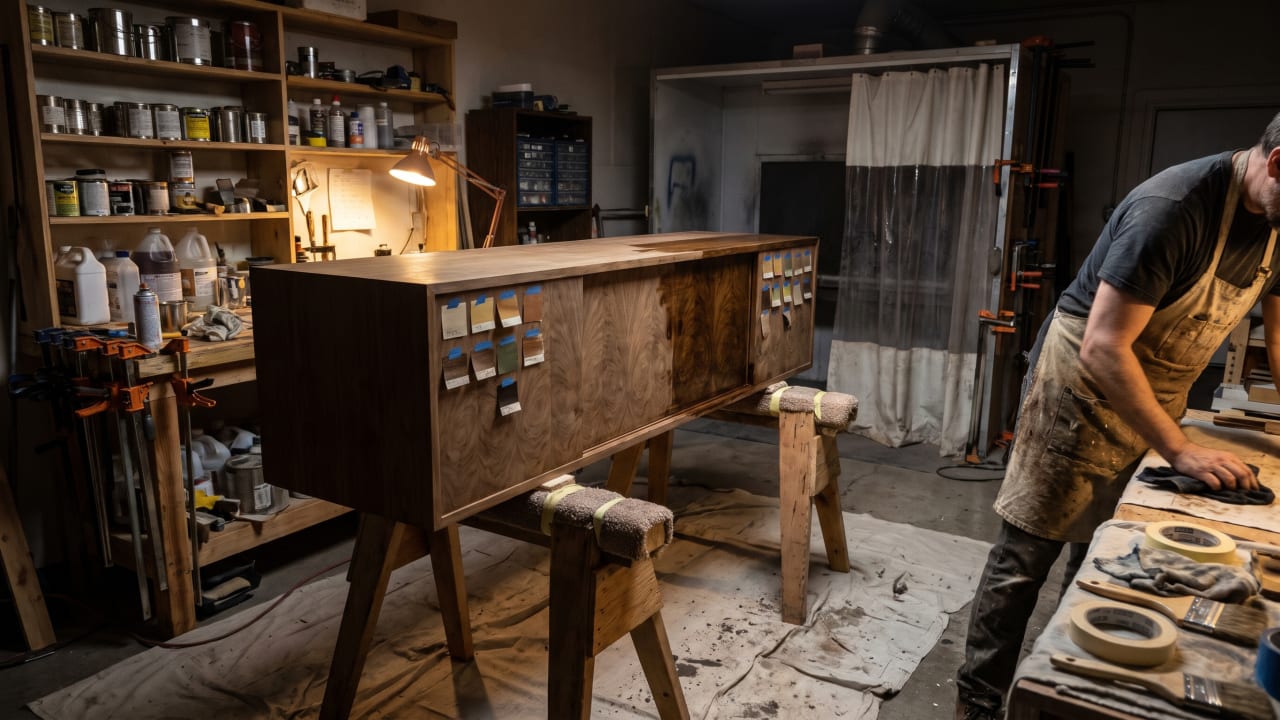
Our 2425 Parker Road workshop is where the work happens, and most refinishing and repair is done in-house by the same crew from start to finish. A typical path for a high-end casegood looks like this:
- Assessment: construction, veneer condition, hardware, and existing finish are documented.
- Structural repair: loose joints are re-glued, doweled where needed, and lifted veneer is secured or replaced.
- Finish removal using the laser stripper or chemical overflow method, depending on the piece.
- Sample passes and color matching on the actual piece.
- Staining and lacquer topcoats, with curing time before reassembly.
- Final inspection, hardware reinstalled, and delivery arranged.
Standard furniture refinishing generally runs 5 to 6 weeks, and a single piece is often 4 to 6 weeks. Fall is a busy season as families get ready for the holidays, so if you want a dining table back before a gathering, starting early gives you room. If you would like to see the facility first, our tour of our furniture repair facility shows where your piece will be worked on.
Cost Expectations for High-End Pieces
Every luxury piece is different, so the estimate always comes from photos and conversation rather than a flat list. Still, some reference points help with planning. Refinishing jobs start at $600, and small pieces such as end tables and side chairs generally land between $275 and $650. A single dining chair is typically $275 to $375, a standard top-only dining table finish is about $120 per running foot, and a full dining set with six chairs commonly runs $2,500 to $4,000. A dresser or hutch is often $1,200 to $2,200. Basic repairs start at the $125 shop minimum.
Value is not only monetary. A designer piece that was custom-built for your dining room, or a chair you remember from a parent’s house, is often worth restoring even when a replacement would cost less on paper. For a wider breakdown, our furniture refinishing cost guide for DFW walks through what drives a quote up or down. For a sense of how professional conservators think about caring for furniture, the Smithsonian Museum Conservation Institute publishes helpful conservation resources.
Westlake Luxury Furniture Restoration: Common Questions
Do you restore designer furniture with exotic veneers for Westlake homeowners?
Yes. We refinish and repair veneered casegoods and tables in figured and exotic woods, including pieces with lifted or missing veneer sections. Each project begins with photos and an inspection of the construction so we can plan finish removal that protects the veneer layer.
Can you match the finish of a piece that has aged beside others in my Westlake home?
Yes. We match color on the actual piece through test passes and comparison in your kind of light. Expect several rounds for a complex color. The limit is that wood cannot be stained lighter than its natural tone.
How does pickup and delivery work for large pieces in Westlake?
We offer metro-wide pickup and delivery starting at $250 round trip, depending on location and job size. Pieces are photographed before they move, padded and secured for transport, and checked with you on return.
How long does luxury furniture restoration take?
Standard refinishing runs about 5 to 6 weeks and single pieces often 4 to 6. Reupholstery typically takes 6 to 12 weeks depending on workload, and fabric selection and the deposit happen before pickup so the material is on hand.
Can I supply my designer’s fabric for reupholstery?
Yes. Customer-supplied fabric is accepted at $35 per yard. Alternatively, you can choose from our Greenhouse Fabrics swatch books, with selected fabric arriving about a week after ordering.
Serving Westlake and the Surrounding DFW Communities
We serve Westlake homeowners, plus neighbors in Southlake, Flower Mound, Grapevine, Coppell, Fort Worth, and Dallas, with pickup and delivery available throughout the metroplex. For the full picture of what we handle, see our furniture repair service as well.
Ready to Restore Something That Matters
Fine furniture is built to last, and with the right care it does. Whether the problem is a scratched walnut top, a faded finish, or a chair frame that deserves new fabric, the work is best planned with photos and an honest conversation. Westlake homeowners can request a free online estimate or call the shop at 214-731-3060 to talk through a piece before anything moves.