
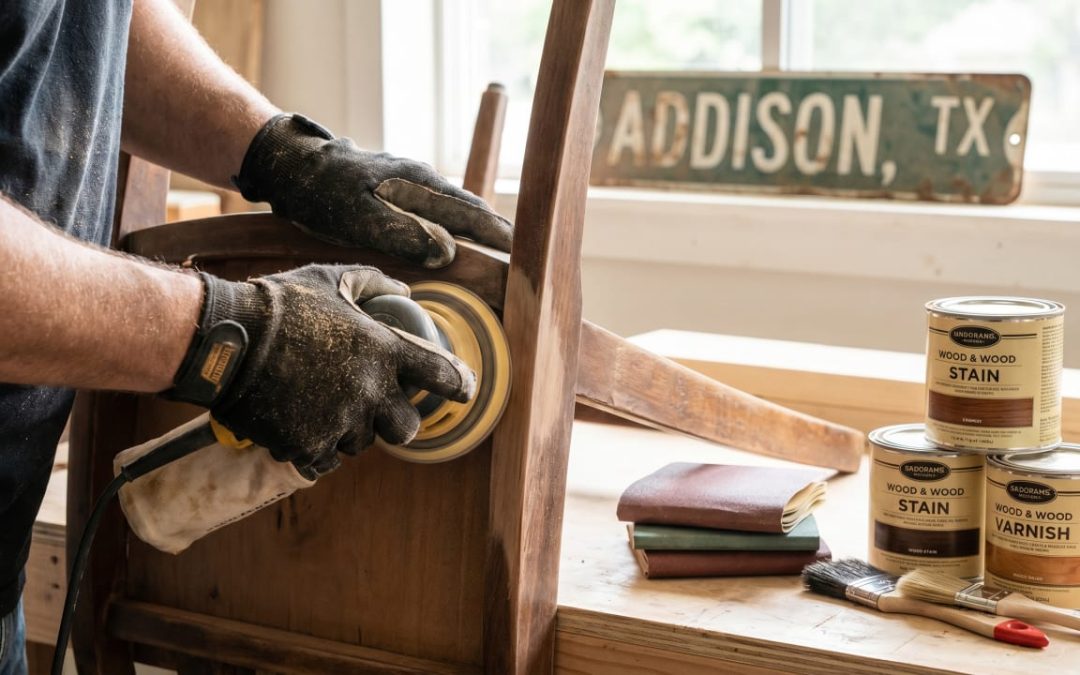
Right Next Door to the Workshop: Furniture Refinishing in Addison, TX
If you live in Addison and you have a dining table, dresser, or set of chairs that has seen better days, there is one thing worth knowing up front: our Carrollton workshop is just a few minutes away. Andrew’s Refinishing has operated from 2425 Parker Rd. Bldg. 5 in Carrollton since 1980, and Addison sits practically on our doorstep. That proximity keeps pickup and delivery efficient, and it means the craftsmen handling your furniture have been serving this corner of North Dallas for 45 years.
This guide covers what furniture refinishing actually involves, how to decide whether refinishing makes more sense than buying new, what pricing looks like in 2026, and what the timeline looks like from the day you call us to the day your piece comes back. You can learn more about our Dallas-area furniture refinishing service or read through our full refinishing process on the site. But if you want the honest, practical picture first, keep reading.
According to the Furniture Repair Service Market research report, the industry has been growing at roughly 7% annually, driven largely by homeowners choosing restoration over replacement. That trend makes sense: solid wood furniture built in the 1970s through the 1990s is often better construction than what you can buy new at the same price point today.
What Furniture Refinishing Actually Involves
The word “refinishing” gets used loosely, so let’s be precise. A full refinish means removing the existing finish down to bare wood, addressing any structural issues or surface damage, applying stain or color, and then laying down a protective topcoat. It is not a touch-up, and it is not a paint job. When done correctly, the piece looks as though it just came out of the original craftsman’s shop.
The first stage is stripping. At our Carrollton shop we use a laser stripper for most pieces, or a chemical overflow method where stripper flows across the surface as we brush. For a piece that only needs its top refinished rather than the full body, a gel stripper applied to that surface works well. What we do not use: submersion tanks, heat guns, or sandblasting. Those methods are too aggressive for the joinery and thin veneers that show up on most residential furniture. You can see the full range of furniture repair work we do alongside refinishing, since structural issues are often caught and addressed during the stripping stage.

Once the old finish is off, you can see the wood clearly for the first time. That is when we assess any damage that needs attention before staining. Scratches that did not penetrate the wood itself, small gouges, grain checks from seasonal movement, loose joints from old glue failures, all of these get addressed at this stage before any color goes on.
Color matching is the step that separates professional refinishing from a hardware-store job. Wood does not accept color the way a painted wall does: every species, every board, every piece of furniture responds differently. As professional refinishers explain, effective color matching requires blending multiple stain shades and testing directly on the actual piece, not on a sample board. We run 3 to 6 test passes on the real wood surface before committing to a formula. One important constraint: we cannot stain a piece lighter than its natural wood color. Stain adds pigment; it does not remove it.
The topcoat for residential furniture is lacquer. Lacquer dries fast, bonds well with itself coat to coat, and produces a protective surface that holds up to daily use. Because it is an evaporative finish, a new coat re-melts slightly into the previous one, so touch-ups do not leave obvious seams the way some other finishes do. We do not use conversion varnish, wax, or gel stain, and interior furniture never gets an oil finish. Those are common in online tutorials; they are not what a professional shop uses for furniture built to last. The one exception on oils is outdoor furniture, where we use either a water-based polyurethane or a hybrid wood oil, matched to the piece and its exposure.
Refinishing vs. Replacing: How to Think About It
The honest answer to “should I refinish or replace?” depends on the piece itself. Three factors are worth weighing.
The Quality of the Wood
Solid wood furniture and pieces built on real-wood veneer over particleboard or MDF can both be refinished well. The distinction that matters is whether the veneer is thick enough to survive stripping (most furniture veneer is) and whether the core is structurally sound. We refinish both solid wood and veneered pieces regularly. What we cannot do is refinish laminate, the printed paper or plastic film used on flat-pack furniture, because there is no real wood surface to work with.
The Cost Comparison
A widely cited rule of thumb from Angi’s 2026 furniture refinishing data is that refinishing typically costs 30 to 50 percent less than purchasing comparable new solid wood furniture. That gap widens considerably when you factor in the quality of older furniture compared to what is available new at similar price points. If the cost to refinish would exceed 50 percent of the cost to replace with something of equal quality, then replacement may make more sense. For most solid wood dining sets, bedroom furniture, and case pieces from the 1960s through the 1990s, refinishing wins that math comfortably.
The Sentimental and Practical Factors
Some pieces have value beyond their resale price: a dining table that belonged to grandparents, a dresser passed down through the family, a bedroom set that represents quality you would be hard-pressed to source again at a reasonable price. For those pieces, the calculus is different. Refinishing preserves the actual object, not just a functional replacement for it.
Why Addison Homeowners Have a Convenient Option
Addison is a small incorporated town immediately south of Carrollton on the west side of the Dallas North Tollway. Our shop at 2425 Parker Rd. is typically a five-to-ten minute drive from most Addison addresses. That proximity makes the logistics simple: pickup and delivery is available for residents starting at $250 round trip, and because the drive is short, scheduling a pickup window is easy to coordinate. If you have a piece you would prefer to drop off yourself, that works equally well.
The mix of established townhome communities, mid-century rental properties, and owner-occupied homes along the Beltline and Arapaho corridors means we see a wide range of furniture from this area. Dining sets from the 1980s, oak bedroom furniture from the 1990s, solid cherry case pieces that were built to be heirlooms, veneer-over-particleboard pieces that just need a clean surface coat. All of it comes through the shop regularly from clients in and around Addison.
What Refinishing Costs in 2026
Pricing at Andrew’s Refinishing is based on the piece, its condition, and what the job actually requires. Here is a general guide to what you can expect. All estimates are firmed up from photos you submit through our online estimate form, and the number we return is binding, not a ballpark that changes when we see the piece.
- Small pieces (nightstands, end tables, single chairs): A single dining chair runs $275 to $375 depending on detail work. A nightstand starts at $650. Small pieces generally fall in the $275 to $650 range.
- Dining sets: A full dining set typically runs $2,500 to $4,000 depending on size, chair count, and condition. Table tops are always fully refinished rather than touched up.
- Dressers and hutches: Typically $1,200 to $2,200 for a full refinish. The range depends on size, drawer count, and whether significant repair work is needed alongside the finish work.
- General starting point: Refinishing jobs start at $600, and larger or more complex pieces run above that. Basic repair work on its own starts at our $125 shop minimum.
Table top refinishing on a standard dining table runs around $120 per running foot when done as a standalone service. Pickup and delivery for clients in the Addison area starts at $250 round trip, though the short distance from the shop makes scheduling flexible.
How Long Does Refinishing Take?
Lead times for refinishing at our shop in 2026 run 5 to 6 weeks for most standard pieces, and 4 to 6 weeks for single smaller items. That timeline reflects the full process: stripping, any structural repair work, sanding, color matching, finish application across multiple coats with dry time between each, and final inspection. You cannot rush lacquer. Each coat needs to cure fully before the next one goes on, and the color-matching passes take the time they take to get the formula right.
We communicate at key milestones: when the piece arrives, when stripping is complete and we have assessed condition, when color is locked in, and when the piece is ready for pickup or delivery. If anything unexpected turns up once stripping is done, such as damage hidden under the old finish, we contact you before proceeding.
The Refinishing Process: A Walk-Through
Here is what happens from the moment you reach out through the moment your furniture comes back.
Step 1: Photo Estimate
You submit photos through our free online estimate form. We review them, ask any follow-up questions about condition or scope, and return a binding written estimate. No in-person visit required to get a number.
Step 2: Pickup or Drop-Off
For clients in Addison, we schedule a pickup window and send a crew to load the piece. The short drive to Carrollton means we can often schedule pickups with more flexibility than further-out suburbs. Drop-off at the shop works equally well if you prefer.
Step 3: Stripping
The existing finish comes off using our laser stripper or the chemical overflow method. This is skilled work: stripping must be thorough without damaging the wood surface, veneer edges, or the joinery. Once the piece is stripped, we can see exactly what we are working with.
Step 4: Surface Repair
Any damage identified during assessment gets addressed here: gouges, grain checks, loose joints, broken sections. This is also where structural repairs happen if they are part of the scope. Surface damage that was hidden under a dark old finish sometimes shows up at this stage; we document and contact you if that changes the estimate.
Step 5: Sanding
The piece is sanded through progressively finer grits to create a smooth, uniform surface for stain and finish. This is one of the most labor-intensive parts of the process and one of the most consequential: any unevenness in the sanded surface telegraphs through every coat applied afterward.
Step 6: Color Matching and Staining

Color is the most technically demanding part of a refinishing job. As noted in Mumford Restoration’s refinishing guide, color matching done right requires blending multiple stain formulas and testing directly on the piece rather than relying on sample chips. We typically run 3 to 6 test passes to arrive at a formula that matches the natural character of the specific piece of wood. Color can only go darker, not lighter: that is a physical reality of staining, not a limitation of any particular shop.
Step 7: Finish Coats
Lacquer goes on in multiple coats, with dry time and light sanding between each coat. The final result is a hard, protective surface that resists daily wear. The finish is inspected under controlled lighting before the piece leaves the shop.
Step 8: Delivery or Pickup
Your piece comes back on a scheduled delivery window, or you pick it up at the shop. For Addison addresses, delivery logistics are straightforward given the short distance. The piece is wrapped and protected for transport the same way it was on the way in.
Pieces We See Most Often from Addison Clients
Based on what comes through from clients in this part of North Dallas, a few categories show up most often.
Dining Sets
Dining tables and chairs from the 1980s and 1990s are the most common category. Oak sets from that era are frequently in structurally excellent condition but have finish problems: worn spots, water rings, uneven coloring from sun exposure on one side of the table. A full refinish of an oak dining set can bring it back to better than its original finish quality, since the lacquer we apply today is more protective than the finishes available when the piece was made.
Bedroom Furniture
Dressers, nightstands, and armoires are common candidates. Bedroom furniture tends to accumulate surface abuse over the years: contact paper residue, water rings from plants, decades of normal use. But the frames are typically solid. A dresser that looks tired can come back looking genuinely new without replacing it.
Heirloom Pieces
Family pieces with meaning beyond their market value come to us regularly from across the North Dallas area. A credenza from the 1960s, a side table that has been in the family for decades. These pieces benefit from the care that a specialized shop provides: one that has been doing this since 1980 and understands what preservation means versus simply repainting.
A Note on Veneer and Particleboard
A lot of furniture built from the 1970s onward is not solid wood all the way through. The visible surfaces are real wood veneer over a particleboard or MDF core. This type of construction refinishes well as long as the veneer is intact. We can strip, sand, stain, and finish a veneered piece the same way we would a solid wood one. What we cannot do is refinish laminate, the paper or plastic film found on flat-pack furniture, or structurally repair a particleboard core that has swollen or delaminated. If you are unsure which you have, photos in an estimate request usually make it clear.
We Serve Addison and the Surrounding North Dallas Area
Our Carrollton workshop serves Addison, TX and surrounding communities including Farmers Branch, North Dallas, Richardson, Preston Hollow, and Carrollton itself. The short distance between Addison and our shop at 2425 Parker Rd. makes pickup and delivery straightforward for clients throughout this part of the DFW metroplex. If you are outside these areas but still in the metro, call us at 214-731-3060 and we will work out logistics.
Frequently Asked Questions About Furniture Refinishing in Addison, TX
How much does furniture refinishing cost in Addison, TX?
Refinishing jobs at Andrew’s Refinishing start at $600. A single dining chair runs $275 to $375. A full dining set typically comes in at $2,500 to $4,000. A dresser or hutch runs $1,200 to $2,200. Nightstands start at $650. Pricing is based on a photo estimate submitted through our website, and the number we return is binding. Pickup and delivery for Addison clients starts at $250 round trip given our proximity in Carrollton.
How long does furniture refinishing take for Addison residents?
Most standard refinishing jobs take 5 to 6 weeks from when the piece arrives at our Carrollton shop. Single smaller pieces can run 4 to 6 weeks. That timeline covers stripping, any repair work, sanding, color matching, multiple finish coats with dry time between each, and final inspection. We communicate at key milestones throughout the process.
Can you refinish furniture with a veneer over particleboard?
Yes. We refinish solid wood and furniture built with real wood veneer over particleboard or MDF cores regularly. As long as the veneer is intact and the core is structurally sound, the piece refinishes well. We cannot refinish laminate (the paper or plastic film on flat-pack furniture), and we do not do structural repairs on swollen or delaminated particleboard cores.
Do you offer pickup and delivery in Addison, TX?
Yes. Our Carrollton workshop is just a few minutes from most Addison addresses, so pickup and delivery is easy to schedule. Pickup and delivery starts at $250 round trip. You are also welcome to drop the piece off at the shop if that is more convenient.
Can you match an existing stain color when refinishing in Addison?
Yes, but the process works on the actual piece, not a sample board. Wood species, age, and grain pattern all affect how stain absorbs, so we run 3 to 6 test passes on the real surface before locking in a formula. One firm limit: we can match or go darker than the natural wood color, but we cannot stain a piece lighter than its natural wood.
Ready to Get an Estimate?
Andrew’s Refinishing has been doing this work since 1980, founded by John and operating from the same Carrollton workshop for 45 years. The shop is a short drive from Addison, and every step happens in-house: stripping, repair, color matching, and the final lacquer finish.
If you have a piece that needs attention, the fastest way to get a number is through our free online estimate form. Submit photos, we review them, and you get a binding written estimate back. No in-person visit required to get started. You can also reach us directly at 214-731-3060. Our location and contact page has full directions to the Carrollton shop if you prefer to drop off your piece.
Furniture built to last deserves a shop that has been at this long enough to know the difference. For homeowners in Addison, that shop is a few minutes away.