

Furniture Restoration in Lakewood, Dallas Starts With the House It Came From
Walk through Lakewood on a Saturday afternoon and you will pass Tudor cottages with steep gables, Spanish Eclectic bungalows with arched doorways, and Colonial Revival two-stories that have stood near White Rock Lake since the neighborhood’s building boom in the 1920s and 1930s. Furniture restoration in Lakewood, Dallas is a different job than restoring a piece from a 1990s tract home, mostly because of what is actually inside these houses: solid oak dining sets, walnut buffets, mahogany secretary desks, and the occasional Arts and Crafts piece that has been handed down three generations. At our Dallas furniture repair shop, we see this housing stock come through the door constantly, and it changes how we approach the work.
The instinct with a piece this old is often to replace it, especially once a joint goes loose or a finish turns cloudy. But EPA data on municipal solid waste shows Americans discard roughly 12 million tons of furniture a year, with about 80 percent of it landfilled rather than reused. A lot of that furniture was not built to last in the first place. The pieces coming out of a 1928 Lakewood bungalow usually are. When a piece needs more than a repair, we handle full furniture refinishing, stripped down to bare wood and rebuilt in a finish that will actually hold up to another few decades of use.
Why These Older Homes Hold Onto Furniture Worth Saving
Lakewood’s reputation as one of Dallas’s grandest neighborhoods traces back to the 1920s and 1930s, when builders like Clifford Hutsell and the firm of Dines and Kraft put up French Eclectic, English Tudor, and Colonial Revival homes on the wooded lots overlooking White Rock Lake. Those houses came with built-in cabinetry, formal dining rooms, and enough square footage to hold real furniture rather than flat-pack pieces meant to last a decade. If your dining table or dresser has been in the family since that era, or you bought a Lakewood home that came with the previous owner’s furniture, there is a good chance you are looking at solid wood construction that is genuinely worth restoring instead of replacing.
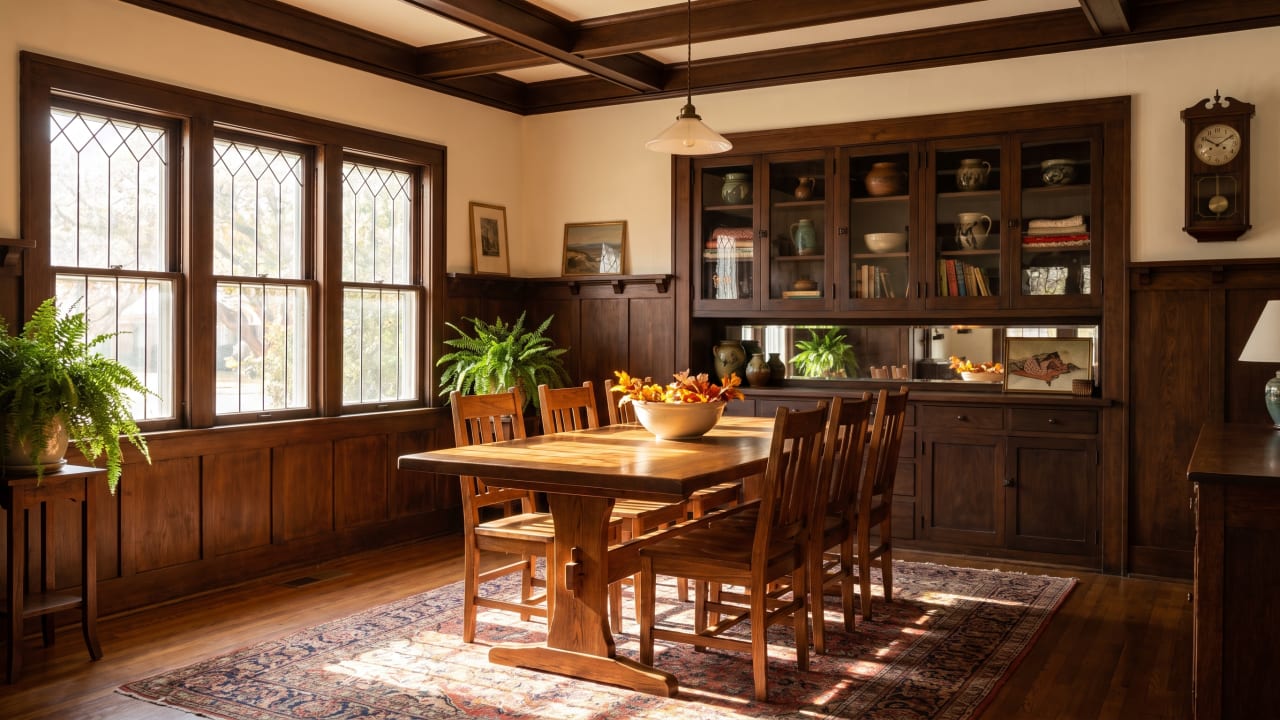
The Craftsman and Arts and Crafts movement that shaped a lot of this bungalow-era architecture in Dallas also shaped the furniture that filled those rooms: quarter-sawn oak with visible joinery, simple lines, and finishes meant to show the grain rather than hide it. That is a different animal than the boxier furniture that started showing up in the 1970s and 80s, and it takes a different eye to refinish it well. Oak in particular takes stain unevenly if you are not paying attention to the grain, which is one reason we treat every dining set from an older home as its own project instead of running it through the same process as a builder-grade piece.
What We See Coming Out of These Older Dallas Homes
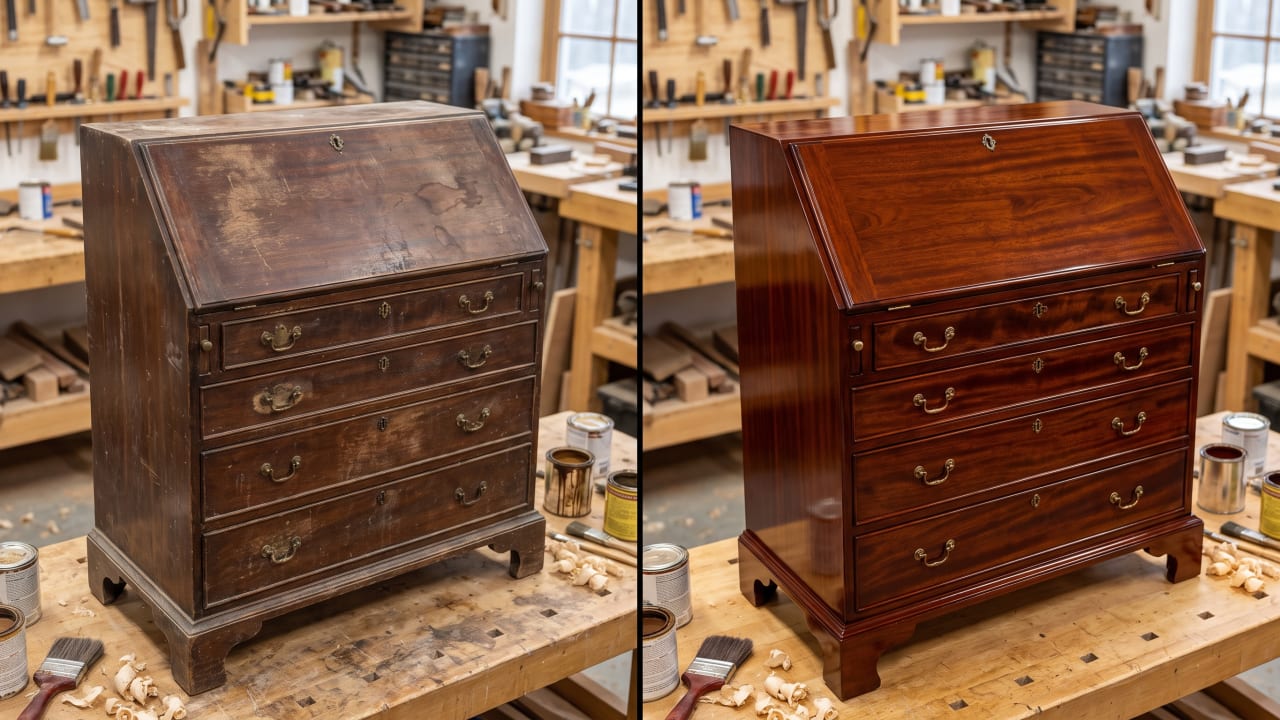
The calls we get from Lakewood and the surrounding streets tend to follow a pattern. There is the walnut dining set that has been through fifty Thanksgivings and has the water rings to prove it. There is the oak buffet with a drawer that has stopped sliding and a top that has gone dull and cloudy. There is the mahogany secretary desk from a grandparent’s estate that nobody wants to part with but nobody has been using either, because the veneer has started to lift at one corner. We wrote up a related piece on why oak takes stain differently than other species, and it is a question that comes up constantly with furniture this age.
Most of what we pull out of these houses is solid wood, and we also do a fair amount of work on furniture built from particleboard or MDF with a real wood veneer glued on top, which was common in some of the later additions to these Lakewood homes. What we cannot refinish is anything with a plastic laminate surface instead of a wood veneer, since there is no real wood underneath to bring back. The good news is that lifted or missing veneer sections are very repairable. Bubbling veneer across a whole panel usually is not, so if you are not sure which one you are looking at, a photo estimate will tell you quickly.
Structural problems show up just as often as cosmetic ones on furniture this age. Loose joints, dried-out glue, and a chair leg that was “fixed” with a nail at some point in the last forty years are all things we see regularly, and they are straightforward structural repair for a shop that does this every day. Deep gouges get filled with two-part epoxy rather than a wood filler that shrinks over time, and cane or rush seating on an old side chair gets rewoven rather than patched over.
Reupholstery and Cane Work for These Formal Pieces
Homes built in Lakewood during this era tended to have a formal dining room and at least one upholstered piece meant to be looked at as much as sat in: a wingback chair by the fireplace, a set of dining chairs with cane or upholstered seats, a settee tucked into a hallway nook. When the frame on one of these pieces is still solid, which is common with furniture this well built, full reupholstery almost always makes more sense than replacing the whole piece. We work with either customer-supplied fabric, which carries a $35 per yard handling fee, or our own swatch books. We do not keep fabric in stock to browse; once you pick a swatch, it typically takes about a week to arrive at the shop.
Fabric selection and the deposit happen before the piece ever leaves your house, so the material is already on hand when we start work rather than sitting idle waiting on an order. For a regular-use sofa or chair, we point clients toward fabric rated at 30,000 rubs or higher, and closer to 50,000 for a high-traffic room. Cane and rush seats get fully rewoven rather than patched, which is a different scope of work than wicker or rattan repair. That distinction matters because a lot of the older seating we see from this area uses cane, and it holds up well to a proper reweave.
Restoration vs. Replacement: When the Older Piece Wins
Not every old piece is worth the investment, and we will tell you honestly when one does not pencil out. But two things tend to push the math toward restoring rather than replacing a piece from a Lakewood home. First, solid wood furniture built between the 1920s and the 1980s is often assembled better than mid-tier new furniture, with real joinery instead of staples and screws. Second, appraisal guides for antique furniture note that condition, age, and originality all factor into a piece’s value, and a family piece with genuine history often carries sentimental value that no price tag captures anyway.
We price this out honestly rather than guessing. Refinishing jobs typically start around $600, a single dining chair runs $275 to $375, and a full six-chair dining set usually lands between $2,500 and $4,000 depending on condition and finish. Basic repair work, like tightening a loose joint or filling a single gouge, starts at our $125 shop minimum. The free online photo estimate we quote is binding, so what you are told upfront is what you pay. We have restored enough mahogany pieces from nearby historic Dallas neighborhoods to know the sentimental case for restoring almost always holds up alongside the financial one.
What Actually Happens at the Shop
Once a piece leaves your house, here is the honest version of what happens to it. We strip old finish using either a laser stripper or a chemical overflow process, where stripper flows over the piece as we brush it rather than dunking the whole thing in a tank. We never submerge furniture and we never use a heat gun, both of which can scorch old wood or loosen veneer that is already fragile. For a tabletop-only job, we sometimes use a gel stripper so the chemical stays where we want it instead of running down the legs.
After stripping and sanding, residential pieces get refinished in lacquer, which is what we use on the vast majority of interior furniture because it holds up to daily use and can be color-matched across multiple passes until it is right. Color matching happens on the actual piece, not just a sample board, and it is normal to run three to six test passes on an antique before the color lands correctly. Keep in mind we can only match as light as the bare wood allows; we cannot stain a piece lighter than its natural color. Structural repairs, dowel replacement, and joint regluing happen alongside the finish work, so a piece with both cosmetic and structural issues gets addressed in one trip instead of two.
Standard furniture refinishing takes about 5 to 6 weeks from drop-off, and a single piece can sometimes come back in 4 to 6 weeks depending on the shop’s queue. Reupholstery generally runs 6 to 12 weeks depending on workload at the time. If you are working toward a holiday or a specific event, it is worth calling ahead so we can plan the timing around it.
Handling Inherited Furniture from an Older Dallas Estate
This corner of Dallas is established enough that we regularly hear from families settling an estate, sorting through a parent’s or grandparent’s furniture and trying to decide what is worth keeping. It is rarely an all-or-nothing decision. Some pieces, a well-built dining set or a mahogany chest with real joinery, are worth the investment even if they need structural work. Others, especially anything with a laminate surface or a particleboard core that has already failed structurally, are not.
A free online estimate is a low-pressure way to sort that out before committing to anything. Send photos of everything you are considering, and we will tell you plainly which pieces are worth restoring, which need only minor repair, and which are better off donated or replaced. That kind of honest triage matters more with an estate full of furniture than it does with a single piece, since the goal is usually to keep the two or three items that actually matter rather than restore everything by default.
Serving Lakewood and the Surrounding East Dallas Area
Lakewood is one of several older Dallas neighborhoods where we regularly restore and repair furniture, alongside East Dallas, Lake Highlands, Downtown Dallas, Highland Park, and North Dallas. Pickup and delivery is available throughout the area starting at $250 round trip, or you are welcome to drop a piece at our Carrollton workshop, where this family has been doing the work since 1980.
Frequently Asked Questions
How much does furniture restoration cost in Lakewood, Dallas?
It depends on the piece and how much work it needs. Basic repairs like a loose joint or a small gouge start at our $125 shop minimum. Full refinishing jobs typically start around $600, with a single dining chair running $275 to $375 and a complete six-chair dining set usually landing between $2,500 and $4,000. Every quote comes from a free online photo estimate, and that number is binding.
How long does furniture restoration typically take?
Standard refinishing runs about 5 to 6 weeks, and a single piece can sometimes be done in 4 to 6 weeks depending on our current workload. Reupholstery projects generally take longer, anywhere from 6 to 12 weeks, since fabric has to be selected and ordered before the piece even arrives at the shop.
Can you match the finish on an antique piece from the 1920s or 1930s?
Yes. We color-match on the actual piece rather than relying on a sample board alone, and it typically takes three to six passes to get an antique’s color exactly right. The one limit is that we cannot stain a piece lighter than its natural wood color, only as light as the bare wood allows.
Do you refinish furniture made from particleboard or MDF, or only solid wood?
Both, with one distinction. We refinish particleboard or MDF furniture that has a real wood veneer on top, which covers a lot of the furniture built in this area during the decades after its original construction boom. What we cannot refinish is furniture with a plastic laminate surface, since there is no real wood underneath to restore.
Do you offer pickup for furniture restoration in Lakewood, Dallas?
Yes, pickup and delivery is available throughout the area and the rest of Dallas-Fort Worth, starting at $250 round trip depending on distance and the size of the job. For cushion-only or foam-only work, we generally prefer customers drop pieces off at the shop directly.
Restoring What This Neighborhood Has Held Onto for a Century
A house built in 1928 does not need furniture that looks like it came from a warehouse. If you have a piece from a Lakewood bungalow, a Tudor cottage, or an older Dallas estate that deserves better than a landfill, our family-run shop has been doing this work since John, Andrew’s father, founded it in 1980, and his son Simon runs the same workshop today. Request a free online estimate and send us a few photos. We will tell you honestly what it will take to bring the piece back, and whether it is worth doing at all.