

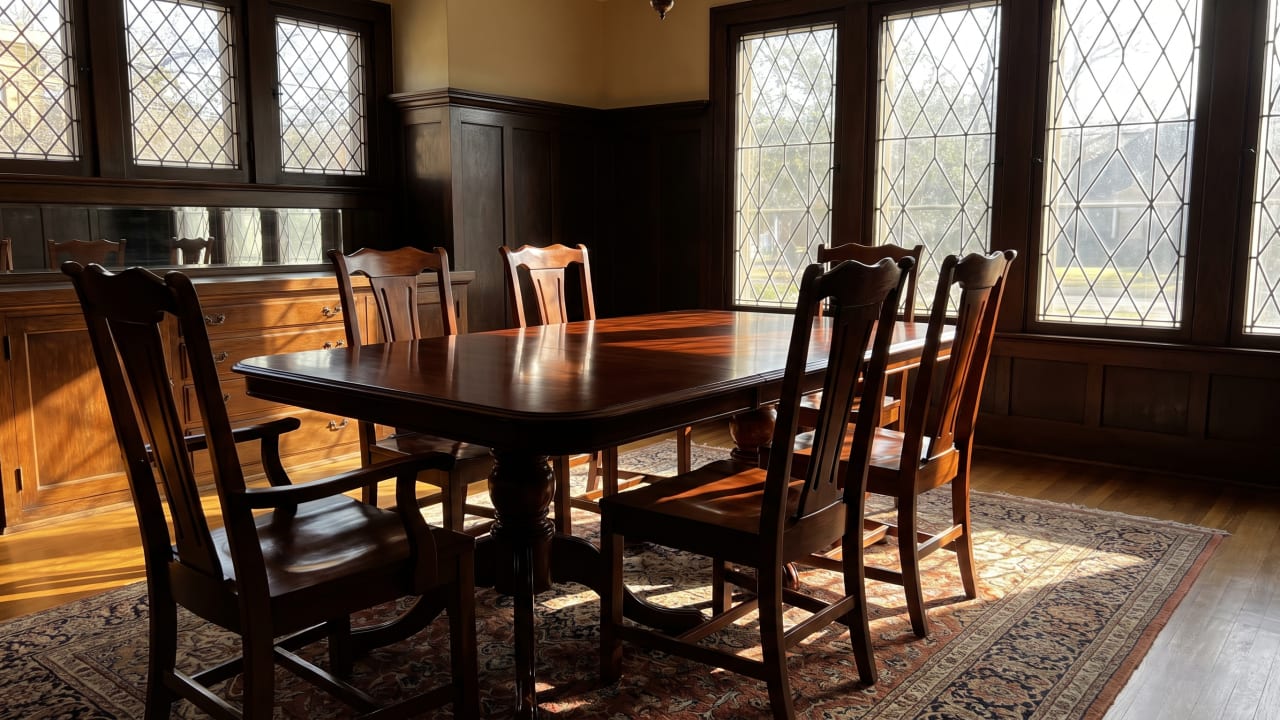
University Park sits in the middle of the Park Cities, wrapped around SMU’s campus, and the furniture inside its homes tends to be older and better built than what you’d find in a newer subdivision further out. Walk through a house near Dublin Road, Purdue Avenue, or one of the streets close to Snider Plaza and you’ll often find a dining set that has been passed through two or three generations, a Tudor-era hutch original to the house, or a desk that came from a grandparent’s study. When these pieces need help, most homeowners aren’t looking for someone to talk them into buying new. They want furniture restoration in University Park, TX done by people who understand what an original piece from the 1930s or 1940s is actually worth keeping.
Andrew’s Refinishing has done that kind of work from our Carrollton workshop since 1980. Our full-service furniture refinishing reaches homes across Dallas-Fort Worth, but University Park’s mix of prewar construction and steady teardown-and-rebuild activity, documented well by Preservation Park Cities, means we see an unusually high share of pieces that are genuinely worth restoring rather than replacing. This is a plain look at what furniture restoration actually covers, what’s worth doing, and how the process runs from the first phone call to the finished piece.
What “Furniture Restoration” Actually Covers
“Furniture restoration” isn’t one specific service. It’s the umbrella term for whatever combination of work gets a piece back to solid and good-looking again. For a single dining chair, that might mean re-gluing a loose joint and blending in a touch-up. For a bedroom set that has been in a family for 40 years, it could mean full stripping and refinishing on every piece, veneer repair on the nightstand, and cane replacement on a vanity stool. We treat refinishing, structural repair, and reupholstery as three separate skill sets under one roof, because most real restoration jobs need at least two of them at once, sometimes all three.
That approach lines up with where the broader market is heading. A 2025 industry analysis from Kentley Insights found that demand for quality wood furniture restoration continues to hold steady even as demand for disposable, mass-market furniture replacement softens, largely because well-built solid wood pieces are worth more restored than a comparable new piece costs to buy. That tracks with what we see on the bench every week: a piece built with real joinery and genuine wood veneer over solid secondary wood is, in almost every case, worth the investment over buying something new and lower quality.
Our workshop’s refinishing process walks through exactly what happens once a piece arrives, from initial inspection through the final finish coat. It’s worth reading if you want the full step-by-step before you commit to a job.
Why University Park Homes Have So Much Worth Restoring
University Park’s housing stock is part of what makes this different from a newer DFW suburb. The neighborhood’s first big wave of construction ran from the 1920s through the 1940s, and it leaned heavily on Tudor Revival cottages, with steep gables and half-timbering, alongside Colonial and Georgian designs. SMU’s own collegiate Georgian campus buildings helped set that architectural mood for the whole area. Houses built in that window came with dining rooms, libraries, and bedrooms sized for real case pieces, not apartment-scale furniture, and a lot of that original furniture is still in place today.
At the same time, University Park sees a steady rate of teardown-and-rebuild activity. When an older home comes down and a new one goes up on the same lot, the family inside doesn’t always want to start over on furniture too. A dining set or bedroom suite that fit the old Tudor perfectly often gets restored and moved into the new build, sometimes reworked with a different stain to match the new interior. We see the same pattern with families settling an estate, where furniture has stayed in one house for 30 or 40 years and the next generation has to sort out what stays in the family and what gets sold or donated.
Both situations point to the same conclusion: restoration work here is less about salvaging something damaged and more about deciding what an already-good piece deserves next.
What’s Worth Restoring, and What Isn’t
Not everything is worth the investment, and we’ll tell you that before we tell you anything else. Solid wood furniture is almost always worth restoring if the joinery is sound. So is furniture built on particleboard or MDF with a real wood veneer glued on top, which is a bigger share of mid-century and 1970s-1980s furniture than most people realize. What we can’t do much with is furniture built on particleboard or MDF with a plastic laminate surface. There’s no real wood under that laminate to refinish, and no amount of stripping and staining changes that fact.
Sentimental value matters here too, and we say that as craftsmen, not salespeople. A dresser that’s spent 40 years in the same University Park bedroom might not be worth much on the resale market even fully restored. If it matters to the family, that’s reason enough to do the job right. We’ve restored pieces that would never pencil out financially on paper because the story attached to them was worth more than the wood itself.
One thing worth knowing before you commit to a color change: we can only stain furniture as light as the bare wood allows, never lighter than the natural material underneath. And every color match we do gets tested and adjusted on the actual piece in front of us, not just against a sample board, because the same stain reads differently depending on a piece’s individual grain and age.
Refinishing: Stripping, Staining, and a Lacquer Finish
Refinishing starts with getting the old finish off completely, and how we do that depends on the piece. Most furniture goes through our laser stripper or the chemical overflow method, where stripper flows over the surface as we brush rather than the piece being submerged in a tank. For a tabletop-only refinish, where we don’t want stripper running down carved legs, we use a gel stripper instead so it stays exactly where we put it. We don’t submerge pieces and we don’t use a heat gun, both of which risk scorching or warping wood that’s already 70 or 80 years old in a lot of University Park homes.
Once the old finish is off, sanding levels the surface and opens the grain for stain. Staining is where color matching gets tested, adjusted, and tested again, often three to six passes before we’re satisfied it matches the rest of a set or the sample a homeowner approved. For the topcoat, residential pieces get sprayed with lacquer in our spray booth. It’s a finish that lays down evenly, cures quickly, and holds up to daily use without the yellowing some other clear coats develop over time.
Structural Repair: Joints, Gouges, and Cane Seats
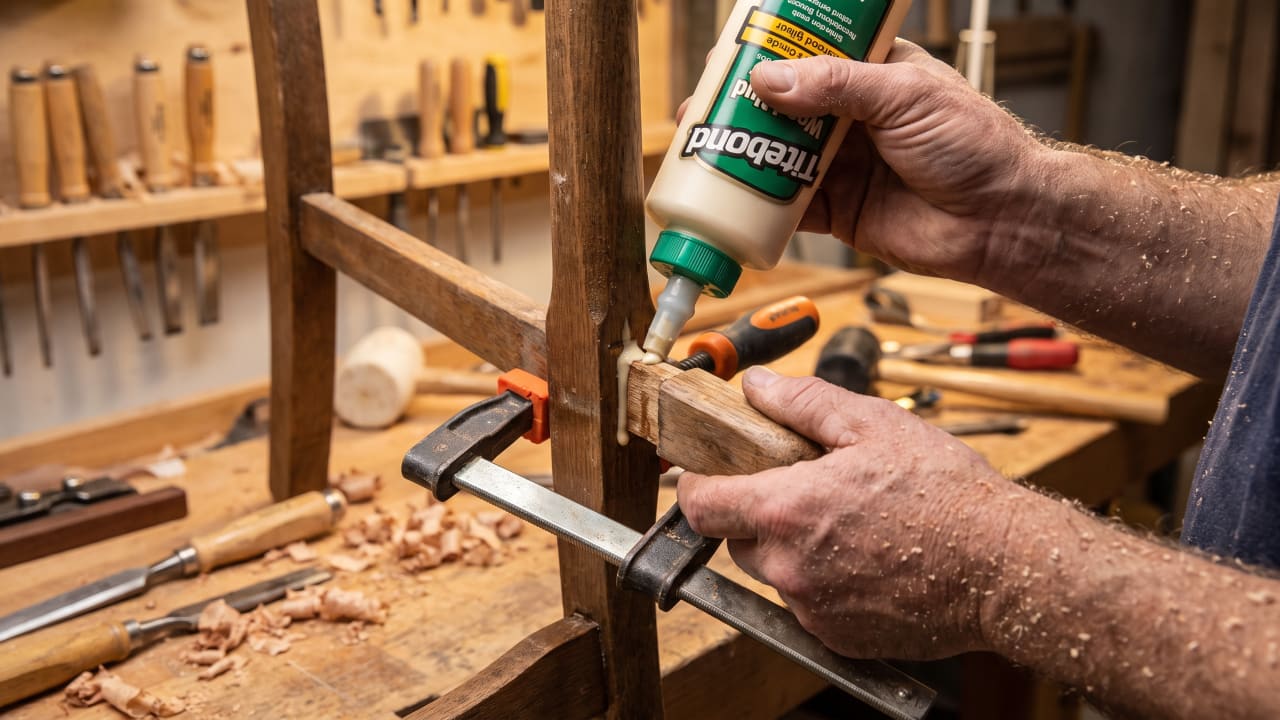
A lot of the furniture we see isn’t in bad shape cosmetically, it’s just loose. Chair joints separate after decades of use, dowels fail, and legs develop a wobble that gets worse every year. We re-glue and re-dowel these joints so they’re structurally sound again, not just tightened temporarily until the next dinner party. Deeper gouges and chips get filled with two-part epoxy, sanded flush, and blended into the surrounding finish so the repair disappears.
Cane and rush seats are common on the kind of dining chairs and vanity stools that turn up in older Park Cities homes, and we replace both by hand. That’s a different scope of work from wicker or rattan restoration, which we don’t take on.
Museum conservators follow a similar hierarchy when caring for wooden furniture, stabilizing what’s structurally at risk before addressing cosmetics, a principle laid out well in this conservation primer on caring for historic furniture. We apply roughly the same order of operations on the bench: structure first, finish second.
There are a few things we won’t touch. We don’t repair leather. We don’t do structural work on particleboard or MDF cores, because the material itself won’t hold a repair. Table and dresser tops don’t get spot touch-ups, when a top needs repair, the whole surface gets refinished. And bubbling veneer, as opposed to veneer that’s lifted or missing a section, isn’t something we can fix. Knowing the boundaries up front saves everyone a wasted estimate visit.
University Park’s Older Homes and Wood Movement
Older homes in University Park often carry layers of renovation behind them: replaced HVAC systems, added rooms, updated insulation, and each of those changes the humidity swing furniture experiences indoors. Solid wood expands and contracts as its moisture content changes, and Texas swings from humid summers to dry winters harder than a lot of the country. According to the USDA Forest Products Laboratory’s Wood Handbook, wood shrinks and swells as it gains or loses moisture below the fiber saturation point, and that movement is what eventually shows up as gapped joints, cracked veneer, or a finish that has gone dull and crazed.
We’ve written before about the specific version of this we see locally, including how summer humidity affects wood furniture and separately, removing white watermarks that show up on finishes after a glass or a hot dish sits too long, both common on furniture that has lived in the same un-updated dining room for decades. If either sounds like what you’re dealing with, those posts go deeper on the specific fix. This article is the broader picture of what restoration covers and how the shop handles it end to end.
Reupholstery for Formal and Everyday Pieces
Restoration isn’t limited to wood. Dining chairs, club chairs, and sofas that have good bones but tired fabric are strong candidates for reupholstery rather than replacement, especially the well-framed furniture common in older Park Cities homes. We work from swatch books rather than an in-store fabric inventory you browse and take home. Once you pick a fabric and put down a deposit, we order it, which typically takes about a week to arrive, and it’s on hand at the shop before your piece is ever picked up. Reupholstery jobs generally run 6 to 12 weeks start to finish depending on how full the shop’s queue is at the time, longer during our busiest stretches in spring and fall.
What It Costs and How Long It Takes
Every job starts with a free online photo estimate, and whatever that estimate says is what you pay, no surprise add-ons once the piece is on our bench. For basic repair work, our shop minimum is $125. Refinishing jobs start around $600. A single dining chair typically runs $275 to $375. A full dining set with six chairs is usually $2,500 to $4,000 depending on style and condition. Dressers and hutches generally fall between $1,200 and $2,200, and nightstands start around $650. If you need us to come get the piece, pickup and delivery starts at $250 round trip, though for cushion-only work we would rather you drop it at the shop.
On timing, standard furniture refinishing runs 5 to 6 weeks, and a single piece is usually 4 to 6 weeks. We go into more detail, with a fuller breakdown by piece and project type, in our University Park furniture refinishing cost guide, worth a look if you’re budgeting for a specific project.
Serving University Park and the Surrounding Park Cities Area
Our workshop is close enough to University Park that pickup and delivery is straightforward, and it’s part of a cluster of DFW neighborhoods where we do steady restoration work. We also regularly serve Highland Park, Preston Hollow, North Dallas, Uptown Dallas, Downtown Dallas, and Addison, plus the rest of the Dallas-Fort Worth metroplex. If you’re near SMU, Snider Plaza, or anywhere else nearby and you have a piece that has earned another chapter, we would like to see it.
Frequently Asked Questions
How much does furniture restoration cost in University Park, TX?
Costs vary by piece and scope, but basic repairs start at our $125 shop minimum, refinishing jobs start around $600, and a full dining set typically runs $2,500 to $4,000. Every job begins with a free, binding online photo estimate, so you know the price before anything leaves your house.
How long does furniture restoration take?
Standard refinishing takes about 5 to 6 weeks, single pieces usually run 4 to 6 weeks, and reupholstery projects take 6 to 12 weeks depending on our current workload. We’ll give you a realistic timeline at the time of your estimate.
Can you restore furniture with veneer instead of solid wood?
Yes, as long as it’s real wood veneer over particleboard or MDF, which describes a lot of mid-century and 1970s-1980s furniture. We can’t refinish furniture with a plastic laminate surface, since there’s no real wood underneath to work with.
Do you pick up furniture from University Park homes?
Yes, we offer pickup and delivery across DFW starting at $250 round trip. For cushion-only jobs, we generally prefer customers drop the piece at our shop instead.
What finish do you use on refinished furniture?
For residential furniture we spray lacquer in our shop’s spray booth. It’s what we’ve used for years because it lays down evenly, cures quickly, and holds up under daily use without the yellowing some other clear finishes develop over time.
Furniture from an older Park Cities home tends to have a head start most newer pieces don’t: real wood, real joinery, and often a family history attached to it. Whether you’re refinishing a dining set that has outlasted two kitchen remodels, repairing a chair that wobbles more than it used to, or reupholstering a sofa frame that’s still worth keeping, that head start is exactly what we work with every day from our Carrollton shop. If you have a piece in University Park that needs a second look, request a free online estimate or call 214-731-3060, and we’ll tell you honestly whether it’s worth restoring.