
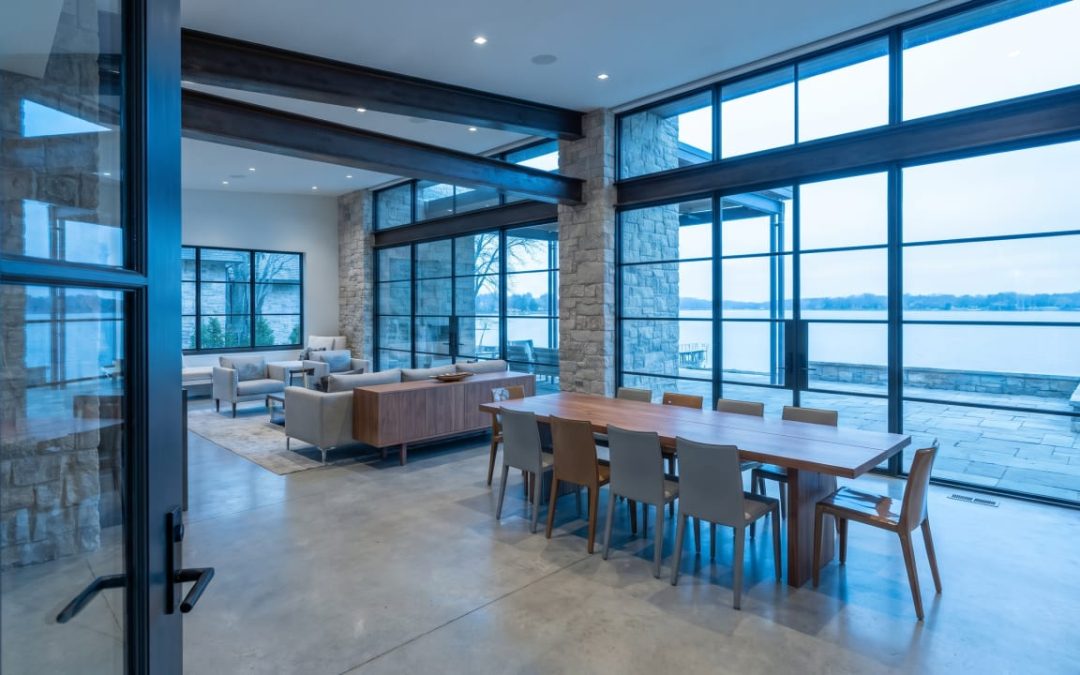
Every few weeks someone sends us a photo of a dining table and asks the same thing: should it get lacquer or polyurethane? It is a fair question, and the honest answer is that both are good finishes that win in different places. This guide lays out polyurethane vs lacquer furniture DFW owners actually deal with, based on decades of refinishing pieces in our Carrollton workshop. If you are weighing a full furniture refinishing job in Dallas, knowing what goes on the wood is half the decision.
Here is the short version. For residential furniture across the metroplex, we spray lacquer. For commercial interiors we use polyurethane or pre-cat lacquer. For outdoor pieces we use water-based polyurethane or a hybrid wood oil. The rest of this article explains why, so you can read an estimate with confidence. If you would like to see how a job moves through the shop first, our step-by-step refinishing process walks through it.
How Lacquer and Polyurethane Actually Differ
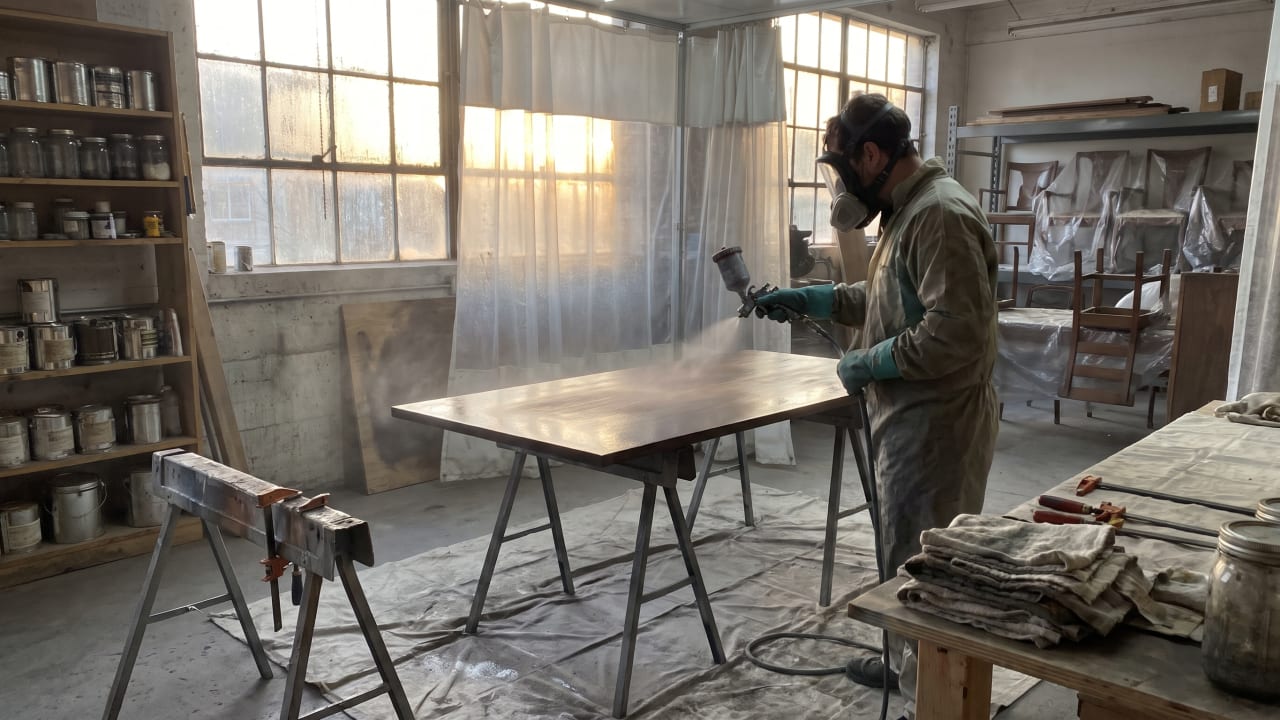
Both finishes protect wood by building a clear film on the surface, but they get there differently. Lacquer is a fast-drying finish that is sprayed in thin coats. Each new coat partially dissolves into the one beneath it, so the layers fuse into a single, continuous film. Polyurethane is a tougher resin that cures into a harder, more plastic-like shell. It lays down thicker and sits on top of the wood more than it bonds into the layers below.
That one difference drives almost everything else. General references on wood finishing generally land in the same place: polyurethane resists wear and moisture a bit better, while lacquer is easier to sand, touch up, and refinish later. Independent testing discussed on WoodWeb’s finish toughness comparison shows the gap in everyday toughness is smaller than the marketing suggests, which is why the better question is usually repairability rather than raw hardness.
Side by Side
- Look: Lacquer dries crystal clear and lets the grain and stain color show through with very little added tone. Oil-based polyurethane can add a slight amber cast over time. Water-based polyurethane stays clear.
- Repairability: Lacquer melts into its own previous coats, so a future scratch or worn area can be blended. Polyurethane forms a harder film that is tougher to blend, so repairs tend to mean redoing a whole surface.
- Durability: Polyurethane has the edge for constant moisture, abrasion, and heavy public use. Lacquer holds up well under normal household life when it is applied correctly.
- Feel: Lacquer leaves a smooth, natural feeling surface. Polyurethane often reads as a little more like a coating.
- Drying and cure: Lacquer flashes off quickly between coats, which lets a shop build a clean finish without dust settling in for hours.
Why Lacquer Is Our Finish for DFW Homes
When a dresser, buffet, or dining set comes into the Carrollton shop from a home across the metroplex, it goes out in lacquer. Residential furniture lives a different life than a restaurant booth. It gets dusted, used at dinner, bumped by vacuum cleaners, and occasionally scratched by a pet or a sibling. Over twenty or thirty years, it will almost certainly need a touch of attention, and lacquer is the finish that makes that attention easy.
Because the layers fuse, a future refinisher can scuff the surface, spray fresh coats, and end up with a single uniform finish instead of a stack of mismatched layers. For a family piece you plan to keep for another generation, that matters more than a small difference in hardness. It is the same reason we favor lacquer on the antique and heirloom work that makes up much of our bench. Older pieces are stripped and refinished in a modern lacquer that brings out the color of the wood without hiding it.
There is also the matter of looks. Walnut, mahogany, and quartersawn oak are chosen for depth and figure. Lacquer is clear enough to let that character show, and it can be sprayed in sheens from satin to a soft semi-gloss that suits most homes. Our posts on why oak takes stain differently and on color-matching walnut sets in Plano show how much of the final look comes from stain and finish working together.
Residential lacquer comes in two broad types, nitrocellulose and pre-catalyzed. Both are sprayed in thin coats, and the pre-catalyzed version gives a slightly harder film for high-use surfaces like dining tables. We match the type to how the piece will be used, not to a one-size recipe. A well-applied coat is also kind to the next person who works on the piece, which is the part owners rarely think about until years later.
Where Polyurethane Wins: Commercial Interiors and Outdoor Pieces
Polyurethane earns its place when a surface takes a beating no household would give it. Think hotel casegoods, church pews, restaurant tables, or office conference tables that get wiped down daily. These pieces see liquids, cleaning chemicals, and constant contact. For commercial interiors we use polyurethane or pre-cat lacquer, depending on the surface and the traffic, and we choose whichever fits the way the room is run. Our commercial furniture services page covers volume jobs for hospitality, offices, and institutions.
Outdoors, the conversation changes again. Patio tables and teak benches here deal with UV, rain, and wide swings in temperature, and a finish that is too brittle will crack and lift. For outdoor pieces we use either a water-based polyurethane or a hybrid wood oil, depending on the wood and how the owner wants it to age. Water-based poly keeps a clearer, more film-like look. Hybrid wood oil lets teak keep a natural, easy-to-refresh surface. Our outdoor furniture refinishing page explains how those jobs are scheduled.
One practical note on interiors: if you have a piece that doubles as a hard-working surface, such as a kitchen-adjacent buffet or a bar cart used for drinks, tell us when you send photos. It helps us decide on the right sheen and film build, and we can recommend coasters and trivets that keep any finish looking its best.
Texas Heat, Humidity, and Your Finish
Our corner of Texas has a humid subtropical climate. Summer highs routinely run into the high 90s and beyond, according to the National Weather Service Fort Worth office, and our homes swing between air-conditioned dryness and muggy outdoor air every time a door opens. Wood responds to all of it. It swells slightly when humid and shrinks as the air dries out, and no coating fully stops that movement.
The USDA Forest Products Laboratory has tested this directly. Its guidance on protecting wood from humidity notes that finishes slow moisture exchange rather than eliminate it, and that a thicker, more complete film slows it more. What that means for a DFW household is simple: seal every surface, including undersides and the insides of drawers where practical, and keep furniture out of direct sun and away from air vents.
Heat is the other factor. A finish on a piece that sits in a sunny bay window will age faster than one in a shaded dining room. Lacquer tolerates ordinary indoor heat well, but a hot casserole dish set straight on the table is a bad idea with any film finish. Pads and trivets cost a few dollars and save hundreds in refinishing.
What the Seasons Do to Furniture
Late summer and early fall are when we see the most finish complaints: white haze from damp glasses, small cracks at joints where the wood shrank after a long winter heater season, and sticky tops under the sun. These are rarely failures of the finish itself. They are the finish and the wood responding to the seasons. A well-built coat flexes with the wood, and a good shop plans for that instead of trying to seal it into a rigid shell.
Choosing by Piece: A Practical Guide
Here is how we think about it when a customer sends photos for an estimate.
- Dining tables and chairs: Lacquer, typically the pre-catalyzed type for the table. It resists everyday use and can be touched up by the next refinisher.
- Dressers, nightstands, and bedroom sets: Lacquer. These pieces see light wear and look best with a clear, natural finish.
- Antiques and heirlooms: Lacquer, applied after the old finish is removed with a laser stripper or a chemical overflow method that keeps the wood intact.
- Hotel, restaurant, office, and church furniture: Polyurethane or pre-cat lacquer, chosen for the traffic.
- Patio and teak pieces: Water-based polyurethane or hybrid wood oil.
- Kitchen and bath cabinets: These get their own estimate based on the room. See our kitchen and bath cabinet refinishing page.
If the piece you are holding fits two categories, send photos anyway. We would rather ask a question than guess, and the photo-based estimate is free.

What to Expect From a Refinish at Our Carrollton Workshop
Whatever finish goes on, the work that makes it last happens before the first coat. The old finish comes off, usually with our laser stripper or the overflow method, where stripper flows over the piece as we brush it. The wood is then repaired, sanded, and colored, and we test color on the actual piece rather than a sample board. Stain color is limited by the natural wood, so we can match darker tones easily but cannot go lighter than the wood allows. Expect three to six passes to dial in a good match.
After that comes finish. Lacquer is sprayed in thin coats, allowed to cure, and inspected under light. Most furniture refinishing takes about five to six weeks from drop-off, with single pieces often taking four to six. Refinishing jobs start at $600, and a dining table top-only refinish with our standard finish runs about $120 per running foot. For a full breakdown, see our guide to what furniture refinishing costs in the metroplex.
Pickup and delivery is available across the metroplex, starting at $250 round trip, which is handy for large tables and sideboards that do not fit in an SUV.
Caring for a Lacquer Finish After It Comes Home
A fresh finish needs a little patience. Lacquer feels dry quickly, but it keeps hardening for days afterward, so we suggest light use at first and no heavy objects, rubber-backed mats, or plastic tablecloths on a new tabletop for the first few weeks. Rubber and vinyl can leave marks on a young finish, and a felt pad or breathable cloth is a safer choice.
For everyday cleaning, a soft dry cloth or a barely damp one is plenty. Skip sprays that leave an oily film, because they build up and make the surface look cloudy. A good paste-free furniture cleaner used sparingly is fine, and wiping up spills as they happen prevents most of the white rings we are asked about.
Place a pad under hot dishes, use coasters for cold and sweating glasses, and rotate decorative items so the same spot is not covered permanently. Those habits keep a finish looking new for years and keep refinishing on the long end of the calendar. Finish choice matters, but daily habits matter at least as much, and the combination of a sound lacquer coat and a few simple routines is what lets a table outlast its owners.
If a surface does start to look tired, do not wait for it to fail. A dull top or fine scratching is far easier to correct than bare wood, and a quick set of photos is enough for us to say whether a full refinish makes sense or whether the piece is fine as it is.
Serving Furniture Owners Across Dallas-Fort Worth
Our shop sits at 2425 Parker Rd. in Carrollton, and we work with homeowners and businesses throughout the metroplex, including Dallas, Fort Worth, Plano, Frisco, Irving, Southlake, Highland Park, and University Park.
Frequently Asked Questions
Is lacquer or polyurethane better for a dining table in the Dallas-Fort Worth area?
For most home dining tables we recommend lacquer. It holds up to normal family use, looks natural, and can be blended and repaired later. Polyurethane is the better answer when a table will see constant moisture or commercial-level traffic.
Does Texas humidity affect which furniture finish I should choose?
Humidity moves the wood more than it changes the finish choice. A complete, even film on every surface slows moisture exchange, and keeping pieces away from vents and direct sun does as much as the finish type does.
What finish do you use on outdoor furniture around DFW?
Outdoor pieces get either a water-based polyurethane or a hybrid wood oil, depending on the wood and the look you want. Powder coating is our service for outdoor metal frames.
Can lacquer be touched up later if my Plano home gives it a scratch?
Lacquer blends into its own previous coats, so light wear can be refreshed when the piece is next refinished. Tabletops get a full refinish rather than a spot repair, so the result is uniform.
How long does a furniture refinish take at a Dallas-area shop like yours?
Standard furniture refinishing typically takes five to six weeks, and single pieces are often four to six. Busy seasons can run longer, so ask about timing when you request an estimate.
Choosing the Right Finish, Then Letting the Shop Do the Work
Polyurethane and lacquer are not rivals so much as tools for different jobs. Lacquer gives homes a clear, repairable finish that ages gracefully. Polyurethane and pre-cat lacquer protect commercial interiors, and water-based poly or hybrid wood oil carries outdoor pieces through the Texas sun. Matching the finish to the piece is the part we handle.
If you have something in mind, DFW homeowners can request a free online estimate with a few photos, or call the Carrollton shop at 214-731-3060. Founded by John in 1980 and still family-owned, we are happy to talk through your piece before you commit.