
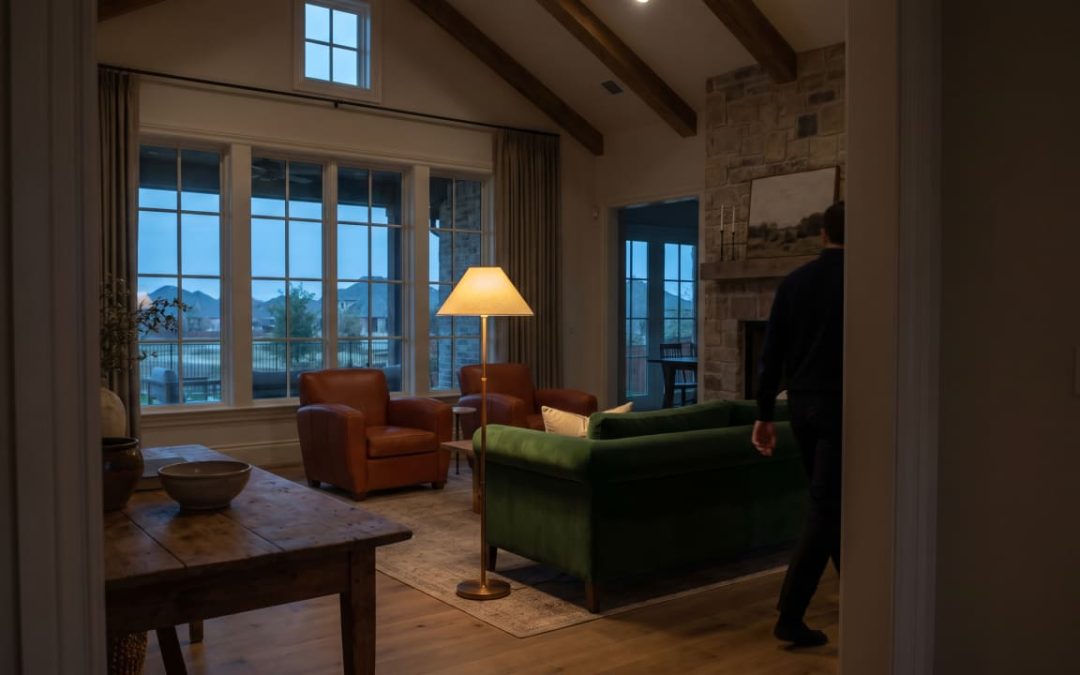
A good sofa outlasts its fabric by decades. The frame, the joinery, and the springs in a well-built piece are usually fine long after the cushions sag and the arms go shiny. If you own one of those pieces, reupholstery in Southlake, TX is often the smarter move than shopping for a replacement that will not be built half as well. Our Dallas-Fort Worth upholstery and reupholstery service has been rebuilding family furniture from our Carrollton workshop since 1980.
This guide is for homeowners who are weighing a restoration: what makes a piece worth saving, how the process runs from fabric choice to delivery, what it costs, and how to pick a fabric that holds up. The math is similar across the metroplex, and we walk through it in our post on reupholstery costs in Frisco. For background on how fabric wear is measured, the Martindale abrasion method is the standard reference, and we lean on it throughout.
Why Southlake Homeowners Reupholster Instead of Replace
Southlake has a lot of homes built in the last 25 years, and many of them were furnished with care: custom sofas, tailored club chairs, dining sets with upholstered seats. Those pieces were an investment, and a good number have reached the point where the fabric is tired but the structure is sound. Replacing a quality piece with a comparable new one often costs more than rebuilding it, and the new piece may not match the room.
There is also the matter of fit. A sofa sized for your family room, with the arm height and seat depth you actually like, is hard to find again on a showroom floor. Reupholstery keeps the proportions you already love and lets you change everything you do not: the fabric, the welt, the cushion firmness, the skirt or leg detail.
According to this overview of upholstery as a trade, stripping a piece to its frame and rebuilding it layer by layer is a centuries-old craft, and the fundamentals have not changed. What has changed is the range of performance fabrics, which makes today’s reupholstered piece more forgiving of kids, pets, and Texas sun than the original ever was.
Signs a Piece Is Worth Saving
- A solid frame. Pick up one corner. If the whole piece lifts without twisting or creaking, the joinery is likely good. Kiln-dried hardwood frames with corner blocks and doweled or screwed joints are what we hope to see.
- Springs that still rebound. Press the seat deck. Sagging foam is easy to replace. Loose or broken springs are a bigger job but still routine for us.
- A silhouette you like. We can change fabric, trim, and cushion fill. Reshaping a piece you never liked is a different conversation.
- Sentimental value. Even when the numbers are close, a grandmother’s wingback or the first sofa you bought together may be worth rebuilding for reasons that never show up on an invoice.
How Reupholstery Works Step by Step
Our process is built around one idea: the fabric should be at the shop before we touch your furniture. That keeps the piece from sitting in a corner of the workshop waiting on a delivery, and it keeps your turnaround honest.
Step 1: A Free Online Estimate
You send photos of the piece (front, side, back, and any damage) through our free online estimate form. We reply with a price range based on the size of the piece, the construction, and the amount of fabric it needs. For a typical three-seat sofa, labor starts at $1,500, and fabric usually adds roughly $1,200, so a complete job starts around $2,500. A skirted, rolled-arm club chair runs about $650 to $900 in labor, with roughly $700 of fabric on top.
Step 2: Choose Your Fabric and Place the Deposit
This is where most of the creative work happens. Our swatch books come from Greenhouse Fabrics, which gives you a wide spread of weaves, velvets, linens, and textured performance cloths to compare in your own light. We work from swatch books rather than shelves of bolts, so once you choose, we order the fabric and it reaches the shop in about a week. You place your deposit at the same time, which is what releases the order.
If you already have fabric you love from a designer or a trade showroom, you can supply your own. We charge $35 per yard to handle customer-supplied material. Because the fabric is cut on a pattern, we confirm the yardage before you buy so you are not left short or paying for a bolt you do not need.
Step 3: Pickup and Delivery
Once the fabric is on its way, we schedule pickup. Round-trip pickup and delivery across DFW starts at $250 and is quoted up front in your estimate, depending on location and the size of the job. Many clients choose this route for large sectionals and heavy sofas, since the workshop is in Carrollton and a full-size sofa is not a one-person load.
Step 4: Strip to the Frame
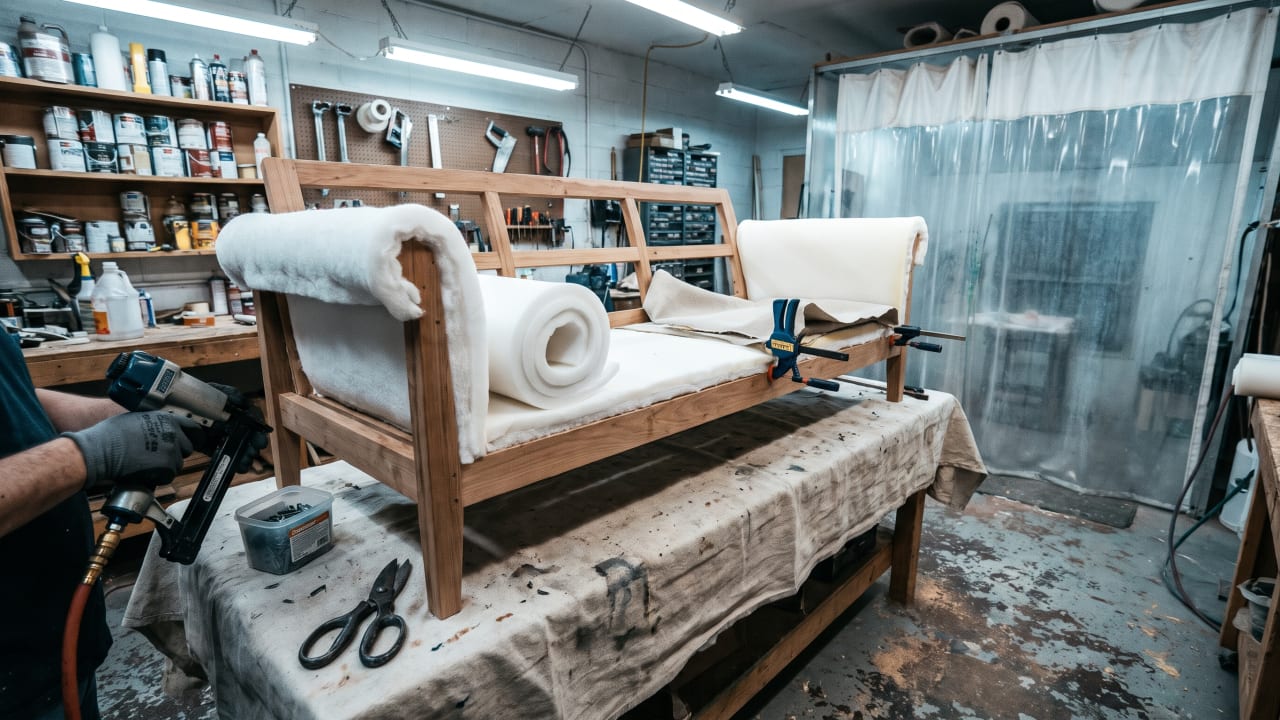
At the shop, we remove the old fabric, padding, and cover materials down to the frame. This is where we find out what is really going on inside. We inspect every joint, check the springs and webbing, and note any frame repairs. If a corner block has loosened or a rail has cracked, we fix it now, because new fabric on a weak frame is a short-lived investment. Our in-house furniture repair team handles the glue-and-clamp work, so the same shop that sews your cover also stands behind what is underneath it.
Step 5: Rebuild, Pad, and Sew
We replace worn foam with new polyurethane HR foam, rebuild the padding layers, and wrap the batting so edges stay crisp. Your cover is then patterned, cut, and sewn to fit. Pattern matching on stripes, plaids, and large prints is planned before the first cut, so the repeat runs cleanly across the back, seat, and arms.
Step 6: Final Fit and Return
We check tension, trim, welt seams, and cushion fit before the piece leaves the shop. Then it comes home. Typical turnaround runs 6 to 12 weeks, depending on what is in the workshop at the time. Fall is one of our busiest periods, so if you want a sofa back before the holidays, start early. We covered that timing in our post on starting fall reupholstery before the holiday rush.
Choosing Fabric That Holds Up in a Southlake Home
Fabric is the part of the project you will see and touch every day, so it deserves more thought than color alone. Three questions narrow the field quickly.
How Hard Will This Piece Be Used?
The Martindale rub count is the number most fabric houses publish for abrasion resistance. For a sofa in a family room that sees regular use, we look for 30,000 rubs or higher. For high-traffic rooms (a media room, a kitchen banquette, a sofa with kids and a dog on it daily), 50,000 rubs or higher is the better target. A higher number does not make fabric stiff or scratchy, either. Many soft chenilles and woven velvets carry strong ratings, so durability and a comfortable hand can live in the same cloth.
How Much Sun Does the Room Get?
North Texas sun is hard on dyes. A sofa facing a west-facing window wall will fade unevenly over a few summers in a loosely rated cloth. Solution-dyed fibers and tightly woven performance fabrics resist UV much better than piece-dyed cottons. If the room is bright, say so when you look at swatches and we will steer you toward weaves built for it.
What Look Are You After?
Tight-weave solids and subtle textures read as tailored and pair well with transitional interiors. Bouclé and nubby chenille give a softer, more relaxed look. Velvet adds depth and a slight sheen that changes through the day. We wrote more about pile direction and cleaning codes in our guide to velvet reupholstery, which applies to any velvet you are considering.
Before you commit, check the manufacturer’s cleaning code on the swatch (W, S, WS, or X). It tells you whether you can spot-clean with water, need a solvent, or must vacuum only. A beautiful fabric with the wrong cleaning code is a regret waiting to happen in a house with children, and fabrics that wipe clean are one of the most common requests we hear from busy family homes around the City of Southlake.
What We Reupholster
Most of the pieces that come through the shop fall into a handful of categories.
- Sofas and sectionals. The largest projects, and often the most rewarding. A rebuilt sofa gets new foam, new springs where needed, and a cover in whatever fabric suits the room.
- Club chairs and wingbacks. The pieces that most often have family history attached. Tufting, nailhead trim, and skirt details are all on the table.
- Dining chair seats and host chairs. Seat reupholstery is considerably more affordable per piece than a sofa, and a full set of chairs can transform a dining room without touching the table.
- Ottomans and benches. Quick wins that tie a room together once the sofa is done.
- Banquettes and window seats. Custom builds that take heavy daily use, so fabric choice matters.
If the frame is fine and only the cushions have gone flat, loose cushions with removable covers can often be rebuilt on their own. See our cushion and foam replacement service for how that works. If the fabric is sewn into the body of the cushion, the labor matches a full reupholstery, so we usually recommend doing the whole piece.
Many clients combine services. A dining set that needs new seat fabric often has a scratched table or loose chair joints, and we can handle the wood refinishing alongside it so the whole set comes back matched.
What “Designer-Grade” Actually Means
The phrase gets used loosely, so here is how we think about it. A designer-grade result has crisp, straight welt lines. It has seams that sit where the eye expects them. It has a seat that feels the same on the left cushion as the right, and a back that holds its shape instead of slumping after a month. None of that comes from the fabric alone. It comes from the foam density, the batting wrap, the tension in the cover, and the hours of hand finishing that go into the corners. That is the work we do, and it is why a piece reupholstered properly looks like it came from a custom house.
Interior designers often send us pieces for exactly this reason: they know what the finished result should look like, and they want a workshop that delivers it. If you are working with a designer, we are happy to coordinate directly on fabric, yardage, and timing, and to send progress photos so decisions do not wait on a site visit.
The same attention applies to details people overlook. Welt cord, whether self-fabric or a contrast, is cut on the bias so it curves smoothly around arm fronts. Skirts are measured to clear the floor evenly on a home’s actual flooring height. Decking fabric on the seat base, the part you never see, is chosen so cushions slide in and out without grabbing. These small decisions are what separate a quick re-cover from a rebuild.

What to Expect on Cost and Timing
Every reupholstery quote has three pieces: labor, foam and padding, and fabric. Labor depends on the complexity of the piece. A plain-back loveseat takes fewer hours than a tufted, skirted sofa with pleats and a channel back. Fabric depends on yardage and on the grade you choose, and a bold pattern with a large repeat takes more yardage than a solid.
As a rough guide, here is where the numbers land:
- Three-seat sofa: labor from $1,500, fabric around $1,200 more, so complete jobs start near $2,500.
- Club or wingback chair: labor $650 to $900, plus roughly $700 in fabric.
- Dining chair seats: considerably less per piece than a club chair or sofa.
- Your own fabric: $35 per yard handling charge.
Those figures are starting points. The real price comes from your photos and your fabric choice, which is why we use the estimate form instead of guessing. For a deeper breakdown of how frame, foam, and fabric add up, read our reupholstery cost breakdown.
On timing, plan for 6 to 12 weeks from pickup to delivery, with the fabric already in hand. The range moves with workload. The sooner you pick your fabric and place your deposit, the sooner your piece gets a slot on the bench.
It also helps to think in cost per year. A rebuilt frame with new HR foam and a quality cover typically gives you another decade or more of seating, which usually works out cheaper per year of use than a mid-range replacement that will need attention in a few years.
Reupholstery in Southlake: Common Questions
How much does reupholstery cost in Southlake?
A three-seat sofa typically starts around $2,500 including fabric, with labor from $1,500 and fabric adding roughly $1,200. A skirted club chair is about $650 to $900 in labor plus roughly $700 in fabric. Send photos through our free online estimate for a number specific to your piece.
How long does it take to reupholster a sofa from Southlake?
Plan for 6 to 12 weeks depending on workload. Fabric is chosen and ordered before pickup, and takes about a week to arrive, so the material is ready when your piece reaches the shop.
Do you pick up furniture in Southlake?
Yes. We offer pickup and delivery across DFW, starting at $250 round trip, with the exact fee quoted up front based on location and job size.
Can I use my own fabric?
Yes. Customer-supplied fabric carries a $35 per yard handling charge, and we confirm yardage before you buy so you order the right amount.
What fabric is best for a busy Southlake family room?
Look for a Martindale rating of at least 30,000 rubs for regular use and 50,000 or more for high-traffic rooms, plus a cleaning code that allows water-based spot cleaning. Our Greenhouse Fabrics swatch books include many options that meet both.
Serving Southlake and Surrounding DFW Cities
We serve Southlake homeowners, plus surrounding Grapevine, Westlake, Flower Mound, Coppell, and Fort Worth, with pickup and delivery across the metroplex. For a look at the shop itself, our workshop tour shows the Carrollton space where every project is built, and the customer reviews page shows what past clients say about the results.
Ready to Start Your Reupholstery Project?
A well-built sofa or chair deserves a second life. If yours has good bones and tired fabric, a proper rebuild gives you the piece you love with a fresh look and years of use ahead. Southlake homeowners can request a free online estimate with a few photos, or call the Carrollton shop at 214-731-3060 to talk through fabric and timing. We are a family-owned shop, founded by John in 1980 and run today by his son Simon, and we are glad to help you decide whether your piece is worth the work.