
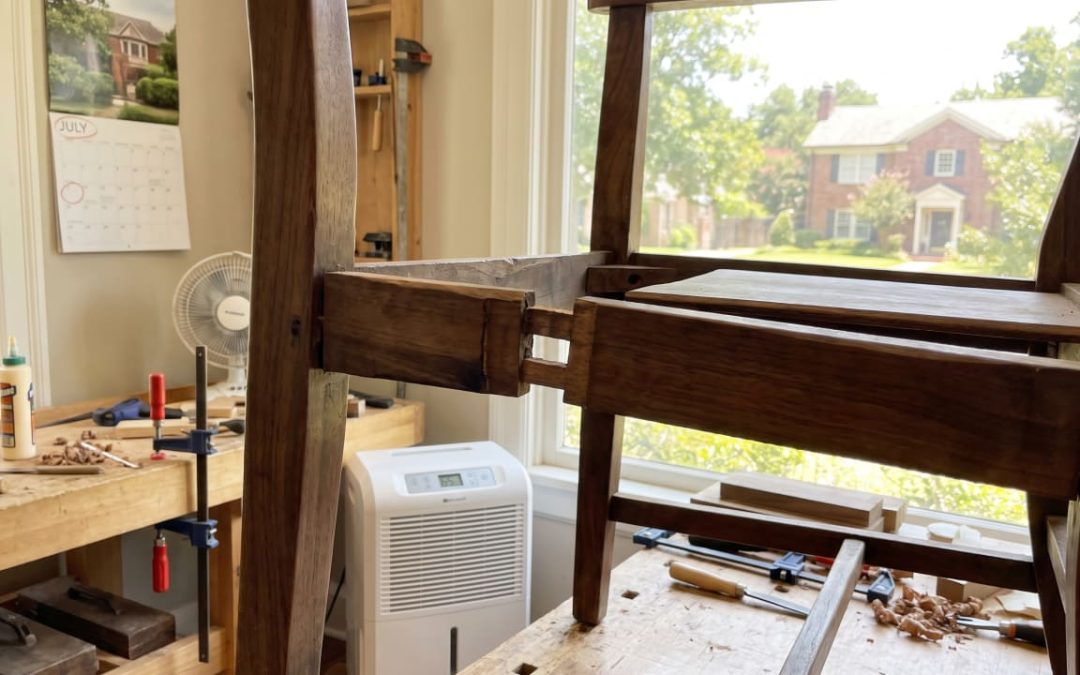
Texas Summer, AC Swings, and Your Wood Furniture
Texas summers do a number on wood furniture, and the effect is easy to miss because it happens gradually, joint by joint, drawer by drawer. University Park’s older, well-established homes are full of real hardwood furniture, dining sets, dressers, antique chests, that have survived decades of Texas seasons. What changes in July and August isn’t just the heat outside. It’s the humidity swing between the muggy air outdoors and the air conditioner working overtime indoors, and wood furniture feels that swing before you do.
Wood is what conservators call a hygroscopic material, meaning it continually absorbs and releases moisture from the surrounding air. According to research from the USDA Forest Products Laboratory, wood’s moisture content rises and falls with relative humidity, and dimensional change (swelling and shrinking) follows right behind it. In a typical DFW summer, that means your dining table, dresser, or antique chest is expanding and contracting more than most homeowners realize. If a piece is already showing signs of stress, our furniture repair specialists in University Park can tell you quickly whether it’s a quick fix or something more involved.
Why University Park Homes See This Every Summer
University Park’s housing stock skews older than a lot of North Texas, plenty of homes built well before central air conditioning was standard, filled with original hardwood floors, built-in cabinetry, and furniture that has been in the family for decades. That’s a lot of solid wood living through repeated Texas summers, and it shows. If you’ve noticed a hazy ring on a tabletop or a cloudy patch near a glass that sat too long, you’ve already seen humidity-related finish damage up close. We covered that specific problem in our post on white watermark removal on wood furniture, and summer humidity is very often the real culprit, not just a forgotten coaster.
Central air conditioning adds a second layer of stress on top of the outdoor humidity. AC systems pull moisture out of indoor air in bursts rather than holding a perfectly level line, and conservation research from the Smithsonian Institution notes that hygroscopic materials, wood included, respond to relative humidity swings with dimensional changes that show up as cracking, warping, and delamination, especially in veneered furniture. If you’ve recently inherited furniture while settling a family estate, our guide on settling an estate in University Park covers how to triage pieces before deciding what’s worth restoring.
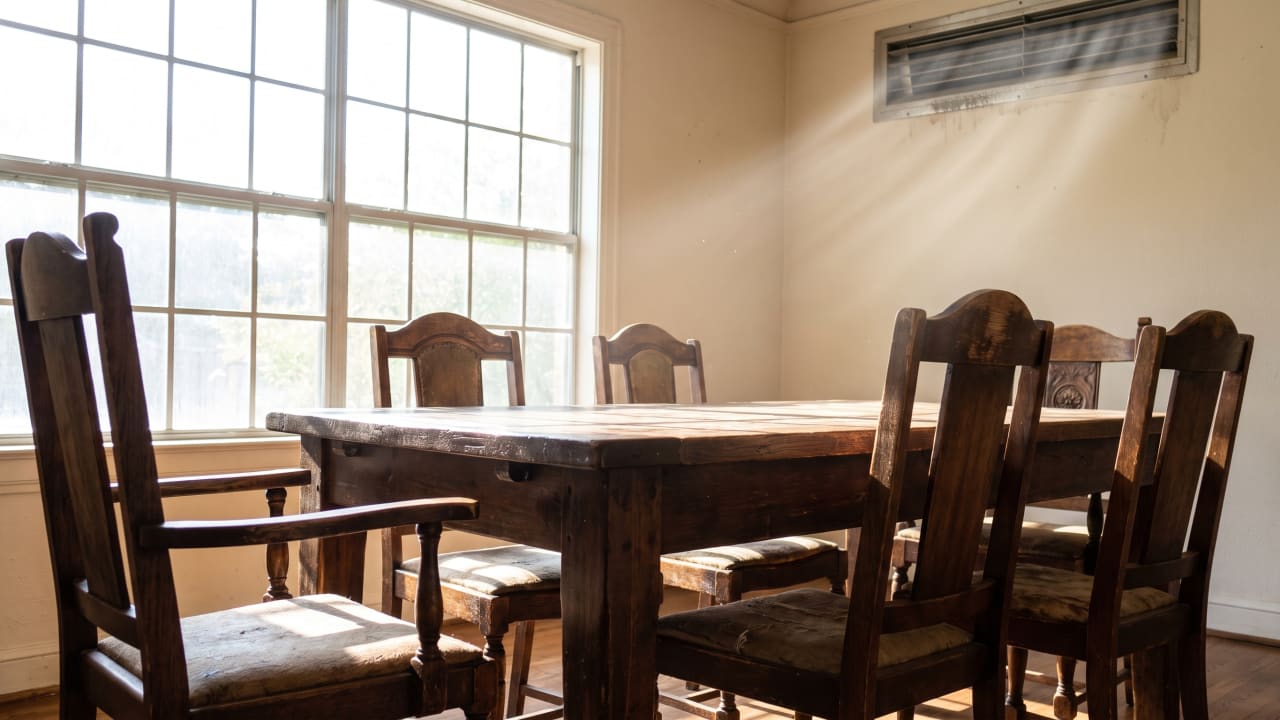
How Humidity Swings Actually Move Wood
Kiln-dried wood stored indoors typically settles into a moisture content that fluctuates from around 4 to 14 percent across the year, depending on climate and season. In a place with Texas-level summer humidity paired with aggressive residential air conditioning, that swing can happen faster than a piece of furniture is built to absorb gracefully. It isn’t really the humidity level itself that causes damage. It’s the speed of the change. A slow shift over weeks gives wood time to adjust; a rapid swing over a few hot, sticky days does not.
That’s why the same dining table that sat perfectly stable all spring can suddenly develop a wobble in July, or why a drawer that glided smoothly all winter starts sticking the week a heat wave rolls through. The wood hasn’t failed. It’s just responding to conditions faster than the glue joints and finish can keep up.
Equilibrium moisture content, the point where wood stops gaining or losing moisture because it has matched the surrounding air, varies a lot by region and by season. Coastal and humid climates push wood toward a higher equilibrium point than dry inland climates do, and North Texas sits in an unusual middle ground: brutally humid outdoor air for months at a stretch, paired with mechanically cooled and dehumidified indoor air for most of the day. That combination creates a bigger day-to-day gap between what the air outside is doing and what a home’s HVAC system is doing than you’d see in a milder climate, and furniture sitting near an exterior wall or a window can feel both sides of that gap depending on the time of day.
Summer Humidity and Wood Furniture Damage in University Park: What Actually Happens
Loose Joints and Wobbly Chairs
The most common humidity-related call we get every summer is a wobbly dining chair or a table that suddenly rocks on legs that used to sit flat. As wood dries and shrinks in cooled, dehumidified air, joints that were snug all winter loosen just enough to move under normal use. This sits squarely in our repair wheelhouse: we re-glue the joint, replace failed dowels, and reinforce the frame so it holds through the next humidity cycle rather than just the rest of the summer. For a closer look at how that repair actually works, see our guide to loose joints and wobbly chair repair.

Finish Crackle
Lacquer, which is what we use on most residential refinishing work, flexes better than older shellac or varnish coatings, but even a good finish can develop fine crackle lines when the wood beneath it swells and shrinks repeatedly over years of summers. You’ll usually see it first on tabletops and drawer fronts, the surfaces that see the most direct exposure to a room’s changing air. Crackle alone doesn’t mean a piece is ruined. It usually means the finish, not the wood, has reached the end of its useful life, and a proper strip-and-refinish solves it. Older pieces finished decades ago, before lacquer became the standard shop finish, are especially prone to this, since early varnishes and shellac coatings were more rigid and less tolerant of repeated movement in the wood underneath them. A piece that’s been finished more than once over its life often shows the most crackle, simply because each added layer is another rigid surface fighting the wood’s natural expansion and contraction.
Lifted Veneer vs. Bubbling Veneer
Veneer damage is where we draw an important line, and it’s worth understanding before you assume the worst. Lifted veneer, where a section of the thin wood layer has separated from the substrate but the wood itself is still sound, is very repairable. We re-glue and re-clamp the section so it sits flat again, and missing veneer sections can be patched and blended into the surrounding finish. Bubbling veneer is a different problem. Guidance from the Northern States Conservation Center points out that humidity-driven separation in veneered furniture often begins with the adhesive layer failing before the wood itself is damaged, and once that bubbling has set in, it usually signals moisture has compromised the glue bond in a way re-gluing can’t reliably fix. If you’re not sure which one you’re looking at, a photo estimate is the fastest way to find out.
Sticking Drawers
Humidity swells wood, and swollen drawer boxes stick in their openings almost every July and August. Most of the time this isn’t a sign of anything broken, it’s wood doing exactly what wood does, and a sticking drawer often eases up on its own once humidity drops back down in the fall. One thing worth knowing: we don’t take on drawer-slide or hardware adjustments as standalone jobs. Alignment and hardware work happen alongside a larger refinishing or repair project, since the underlying cause is rarely the hardware itself. This is also part of why late summer is when we get the most calls about furniture that seems to suddenly develop a problem. The piece isn’t failing all at once, it’s been quietly losing ground since June, and the cumulative shift finally crosses a line where you notice it.
Sun Fade Through Windows
Plenty of University Park streets are well shaded, but pieces sitting in a sunroom or in front of a large west-facing window still take a beating from UV exposure layered on top of summer heat. Fade shows up as color variation, often a lighter patch where a rug or tablecloth blocked the light, and it’s frequently paired with the same finish crackle that heat and humidity swings cause on their own. A full refinish addresses both problems at once, stripping back to bare wood and building an even, fresh finish from scratch.
A Note on Antique and Older Finishes
A lot of the antique furniture we see was originally finished in shellac, the standard wood finish for most of the 19th and early 20th centuries before lacquer took over as the industry standard. Shellac is even more sensitive to humidity and heat than modern finishes. It can turn cloudy, soften, or develop a sticky feel in a hot, humid room. When we restore an antique with an original shellac finish, we strip it back and refinish it in a modern lacquer that holds up far better to Texas summers, rather than trying to preserve a finish that was never built for this climate to begin with.
Where the Repair Line Is: Humidity Damage vs. Water Damage
It’s worth being direct about where our repair work stops, especially for University Park homeowners trying to figure out if a problem is fixable. Everything described above, loose joints, finish crackle, lifted veneer, sticking drawers, sun fade, comes from ordinary humidity and heat cycling through a piece over months and years. That’s a different situation from a piece that has taken on standing water from a leak, a flood, or an overflow. When the substrate itself has swollen and been structurally compromised by actual water intrusion, that falls outside what we repair, because the wood has absorbed more moisture than a repair can reverse. If you’re dealing with a hazy watermark, a humid summer, or a finish that’s crackled from years of seasonal swings, you’re in exactly the right place. If you’re dealing with standing water damage, tell us upfront so we can point you toward the right next step.
Prevention: Practical Habits for University Park Homes
You can’t eliminate Texas humidity, but you can slow down how fast it swings through your furniture, and that’s what actually protects joints and finishes over time.
- Keep furniture a few feet away from AC vents and returns, where blasts of cold, dry air create the sharpest local humidity swings in a room.
- Keep pieces out of direct afternoon sun, or use blinds or UV window film to cut down the heat and light load on wood surfaces.
- Set your thermostat to hold a steady temperature rather than letting it swing several degrees between day and night settings.
- Consider a whole-house humidity control add-on if your HVAC system doesn’t already regulate it, since HVAC manufacturers generally recommend keeping indoor relative humidity between 30 and 50 percent for the comfort of both a home and its furnishings.
- Use furniture pads, coasters, or trivets under anything that sits directly on a wood surface near a window or vent.
- A simple humidity gauge (hygrometer) placed near a valuable piece can flag swings before they show up as a stuck drawer or a wobbly joint, giving you time to adjust the thermostat rather than react after the fact.
None of this replaces a professional repair once damage has already set in, but for homes with a mix of antiques and everyday pieces, small placement changes can buy years before something needs to come to the shop.
Furniture Repair Cost and Timeline in University Park
Basic repairs like re-gluing a loose joint or fixing lifted veneer start at our $125 shop minimum. If a piece needs a fuller structural rebuild, or the finish itself needs attention alongside the repair, refinishing work starts at $600. Most single-piece repairs run 4-6 weeks depending on the extent of the work and where we are in the summer queue, which tends to be our busiest season, so booking early helps. Every job is quoted from photos first, so you’ll know the range before anything leaves your house, and because that estimate starts from photos rather than a guess over the phone, you’ll also find out right away if what looks like a simple loose joint actually needs a fuller repair, which happens more often than you’d expect once a piece has been through several Texas summers. For a fuller breakdown of what refinishing runs in this area, see our furniture refinishing cost guide for University Park.
Service Area
Andrew’s Refinishing has been repairing and refinishing furniture across the Dallas-Fort Worth metroplex since 1980, working out of our Carrollton workshop. We serve University Park directly, along with nearby Highland Park, Preston Hollow, North Dallas, Uptown Dallas, and Downtown Dallas, with pickup and delivery available for larger pieces and a straightforward photo-based estimate for everything else.
Frequently Asked Questions
Does summer humidity really damage wood furniture in University Park?
Yes. As indoor humidity swings between a muggy outdoor day and an air-conditioned indoor space, wood furniture expands and contracts more than usual, which is what causes loose joints, finish crackle, and lifted veneer during the hottest months.
Can a wobbly dining chair caused by humidity be fixed?
In most cases, yes. Re-gluing the joint and replacing worn dowels restores stability, and it’s one of the most common repairs we handle during the summer months.
What’s the difference between lifted veneer and bubbling veneer on University Park antiques?
Lifted veneer has separated from the surface below while the wood itself stays intact, so it can be re-glued and clamped flat again. Bubbling veneer usually means moisture has compromised the adhesive layer itself, and that’s not something we can reliably repair.
How much does furniture repair cost in University Park?
Basic repairs like re-gluing a joint start at our $125 shop minimum. If the piece also needs refinishing, that work starts at $600, with an exact quote coming from a free photo estimate.
Should I run a dehumidifier in my home during a Texas summer?
It can help, especially in older homes with a lot of solid wood furniture. Keeping indoor relative humidity in a stable 30 to 50 percent range reduces the swings that stress joints and finishes, though a consistent thermostat setting does most of the work for most households.
Ready to Get Your Furniture Looked At?
If your dining table is wobblier than it used to be, a drawer won’t close right, or you’ve noticed a crackled finish creeping across a tabletop this summer, it’s worth getting a second opinion before the next humidity swing makes it worse. University Park homeowners can request a free online estimate by sending a few photos, or call us directly at 214-731-3060 to talk through what you’re seeing. We’ve been repairing and refinishing furniture across the DFW metroplex since 1980, and a humidity-stressed joint or a lifted veneer section is a routine fix for us, even when it feels alarming at home.